


2 litres? 8 glasses? More if you exercise? And do you actually need electrolytes to stay properly hydrated?
“Most people could do perfectly fine off good water.”
“I don't believe in electrolytes.” The host's remark on the Elle Sera podcast kicks off an interesting exchange with Alexandre Mahe, CEO and founder of Sküma Water, on a question that comes up more and more often: do we actually need to add electrolytes to our water?
In the conversation, both agree on one essential point: electrolyte needs aren't the same for everyone. Someone running a marathon doesn't have the same needs as someone who works, walks and does moderate physical activity day to day.
So how much water should you really drink each day? Should you aim for 2 litres, 8 glasses, more? And when do electrolytes actually become relevant? That's what we'll look at, based on the available scientific evidence.
How much water should you drink a day?
Not all guidelines are talking about the same thing: it's worth distinguishing total water intake from the amount of water you drink as fluids.
EFSA sets an adequate water intake of:
• 2.0 litres a day for adult women;
• 2.5 litres a day for adult men.
These figures include water from drinks and food, under moderate conditions of temperature and physical activity.
In the UK, the NHS Eatwell Guide gives a practical benchmark of 6 to 8 cups or glasses of fluid a day, roughly 1.2 to 2 litres, which includes water, lower-fat milk and sugar-free drinks including tea and coffee, not just plain water.
These two figures aren't actually contradictory.
The EFSA's 2 to 2.5 litres reflects the total water reaching the body, while the NHS's 6 to 8 cups is a practical benchmark for fluids specifically.
Some of your water intake also comes from food: fruit, vegetables, soups, dairy and other water-rich foods.
So, how many litres of water should you drink?
For a healthy adult living in a temperate climate, 1.5 to 2 litres of fluids a day is a reasonable practical benchmark, without needing to hit the exact same volume every single day.
This need increases whenever your water losses increase, notably during:
• hot weather;
• prolonged physical activity;
• heavy sweating;
• fever;
• vomiting or diarrhoea;
• pregnancy;
• breastfeeding.
What matters, then, is understanding why your needs can shift from one day to the next.
Why isn't there one ideal amount of water for everyone?
The human body doesn't work like a tank that needs filling to a precise mark every morning.
The body continuously regulates its fluid balance through thirst, the kidneys, hormones, and water loss through urine, breathing and sweating.
A major study published in Science in 2022 looked at water turnover in 5,604 people across 26 countries, using the doubly labelled water method. The researchers observed huge variability between individuals and identified several factors linked to water turnover, notably age, body size, body composition, physical activity and environment.
Above all, this study highlights the limits of a universal recommendation: water turnover is strongly individual and depends on many parameters. It doesn't define a new optimal amount to drink for each sex or age group.
In other words, the question isn't just:
“How much water should I drink?”
But also:
“How much water am I actually losing in my current situation?”
What factors increase your water needs?
Physical activity
During exercise, the body produces more heat and increases sweating to regulate its temperature. You then lose both water and electrolytes. The longer, more intense, or hotter the effort, the more individualised your hydration needs to be.
Heat
As temperature rises, sweating can increase and so can your fluid needs. During hot weather, UKHSA advises drinking cold drinks regularly, such as water and diluted fruit juice, without waiting to feel thirsty, particularly for those most at risk.
Pregnancy and breastfeeding
According to EFSA, adequate intake can increase by around 300 mL a day during pregnancy and 700 mL a day during breastfeeding.
Illness
Fever, vomiting and diarrhoea can increase water and electrolyte losses. Conversely, some conditions or treatments require fluid restriction: general recommendations don't replace personalised medical guidance.
Is “8 glasses of water a day” a myth?
The advice to drink eight glasses of water a day is one of the best-known hydration recommendations there is.
But this figure isn't a universal scientific rule.
Its commonly cited origin traces back to a 1945 US recommendation covering roughly 2.5 litres of water a day. The important point is that this recommendation included water from food. Over time, that nuance was largely lost from its popular version.
The simplified “8 glasses a day” rule then became detached from diet, temperature, physical activity and body size.
Current guidance is more nuanced than that.
Food contributes to fluid intake. Needs change depending on circumstances. And drinking more than necessary isn't automatically beneficial.
Eight glasses can serve as a simple benchmark for some people, but it isn't a universal physiological requirement.
Do coffee and tea count towards hydration?
Yes.
Water consumed in different forms contributes to your total fluid intake.
A randomised study published in The American Journal of Clinical Nutrition compared the effect of 13 common beverages on hydration status and found that several drinks, including coffee and tea, did contribute positively to hydration under the conditions studied.
This doesn't mean all drinks are nutritionally equivalent.
A drink can contribute to hydration while also delivering a lot of sugar, calories or other compounds best consumed in moderation.
For everyday hydration, water remains the reference drink.
Water and hydration: what's the difference?
Drinking water is essential, but hydration is more complex than sheer volume consumed: water needs to be distributed across different compartments of the body, and its balance with dissolved solutes needs to be maintained.
This is where electrolytes come in.
What is an electrolyte?
An electrolyte is a substance that, once dissolved in the body's fluids, exists as electrically charged ions.
The main electrolytes include, notably:
• sodium;
• potassium;
• chloride;
• calcium;
• magnesium;
• phosphate;
• bicarbonate.
These ions are involved, in particular, in fluid balance, nerve signalling, muscle contraction and maintaining electrochemical gradients.
Are minerals and electrolytes the same thing?
Not exactly.
The term mineral refers to a nutrient such as sodium, potassium, calcium or magnesium.
The term electrolyte describes how these behave once dissolved in body fluids, carrying an electrical charge.
The two concepts are closely linked, but not strictly synonymous.
What role do the main electrolytes play?
Sodium
Sodium is the main electrolyte of the extracellular compartment. It's involved in fluid regulation, nerve and muscle signalling, and is among the main electrolytes lost through sweat.
This explains why sodium can become particularly important during prolonged exertion or heavy sweat losses.
But a common confusion is worth avoiding here too: more sodium isn't automatically better.
The WHO recommends adults limit total sodium intake to less than 2 grams a day, equivalent to less than 5 grams of salt, mainly because of the effects of excess intake on blood pressure.
Potassium
Potassium is the main cation inside cells and is involved, notably, in neuromuscular function and electrochemical balance.
Diet is an important source of potassium, particularly via fruit, vegetables, legumes and nuts.
Magnesium
Magnesium is involved in numerous enzymatic reactions, energy metabolism and neuromuscular function.
Calcium
Calcium is involved, notably, in muscle contraction, nerve signalling and bone health. For most people, these needs are largely covered by a balanced diet.
Should you drink electrolytes every day?
No, not necessarily.
Someone who drinks enough, eats a balanced diet and does moderate physical activity generally doesn't need to systematically consume an electrolyte-enriched drink to maintain hydration.
The situation can be different when losses become significant, notably during:
• a prolonged endurance effort;
• intense physical activity;
• hot weather;
• heavy sweating;
• certain situations involving significant digestive fluid loss.
The American College of Sports Medicine notes that fluid and electrolyte needs during exercise vary significantly between individuals, and that in certain prolonged exercise situations, electrolyte-containing drinks can offer benefits over water alone.
A marathon runner and someone with a moderate daily activity level don't necessarily have the same hydration needs.
The question, then, isn't whether electrolytes are “good” or “useless”, but:
in which situations are they actually useful?
Plain water or water with minerals: what should you choose?
Water can naturally contain different minerals: calcium, magnesium, sodium, potassium, bicarbonates, and so on.
Their concentration depends on its origin and treatment.
Some waters are naturally low in minerals. Others contain higher concentrations of certain minerals.
A water's mineral composition can therefore vary considerably from one water to another.
There's also a difference between water consumed to meet your hydration needs and a drink specifically formulated to deliver electrolytes during exercise or after significant losses.
These aren't necessarily the same use case.
For everyday life, a varied diet generally supplies most of the minerals needed. For certain sporting situations, a targeted electrolyte intake can be worthwhile.
There isn't, then, a single “best water” for every situation.
Why can the composition of water matter?
This question is particularly interesting when it comes to purification and remineralisation systems.
Certain water treatment technologies, such as reverse osmosis, can significantly reduce the concentration of many dissolved substances, including some minerals.
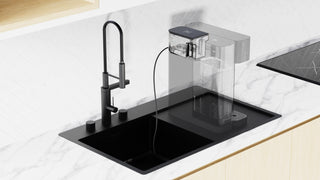
Water treated this way can then be remineralised, meaning certain minerals are reintroduced at defined concentrations.
This approach distinguishes two separate steps: purifying the water, then defining its mineral composition.
This doesn't mean highly mineralised water is necessarily better for everyone, nor that lightly mineralised water is insufficient.
It simply means water composition is a variable that can be considered separately from the volume consumed.
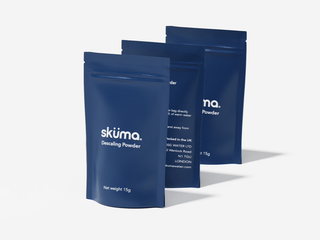
This is the thinking behind Sküma Water's approach: purifying tap water, then remineralising it according to different profiles, rather than treating hydration purely as a matter of volume.
How do you know if you're drinking enough water?
There's no need to measure every millilitre consumed. Several indicators can offer useful information.
Thirst
Thirst is a fundamental fluid-regulation mechanism, but it isn't perfectly reliable in every situation.
In older adults in particular, the sensation of thirst can diminish. That's why UK health guidance recommends drinking regularly rather than waiting to feel thirsty, particularly for older or vulnerable people.
Urine colour
Urine colour can also provide a practical indicator of hydration status.
Darker urine can be consistent with more concentrated urine, while paler urine generally corresponds to greater dilution.
A systematic literature review found an association between urine colour and several measures of hydration status, while also noting that the validity of this indicator varies across populations and situations.
Urine colour shouldn't, then, be treated as a precise medical test.
And crucially, being properly hydrated doesn't mean having perfectly clear urine all day long.
Can you drink too much water?
Yes.
This is a point often overlooked when discussing hydration.
Excessive water consumption can dilute blood sodium and cause hyponatraemia, particularly in endurance sports when the volumes consumed exceed actual losses.
A recent 2025 review notes that exercise-associated hyponatraemia is primarily linked to a relative excess of free water compared to body sodium, and stresses the importance of avoiding fluid overconsumption.
Good hydration isn't about drinking too little, nor about drinking as much as possible.
It's about supplying enough water to offset losses, without systematically trying to exceed your needs.
Hydration and sport: how much should you drink during exercise?
There's no universal amount that applies to every athlete: two people can do the same session and lose different amounts of water and sodium through sweat.
That's why ACSM guidance stresses individualising fluid replacement strategies, and suggests, in particular, estimating sweat rate from weight changes before and after exercise.
For short or moderate activity, water is generally enough to cover fluid needs.
For prolonged effort, particularly beyond an hour or in hot conditions, electrolytes can become more relevant.
It's worth avoiding drinking more simply because you're exercising, though: overconsumption can also carry a risk.
Recent sports medicine guidance stresses individualised strategies, whether thirst-guided or planned around estimated losses, to avoid both excessive dehydration and overhydration.
How much should you drink in hot weather?
As temperature rises, sweat losses can increase, and fluid needs along with them.
During periods of hot weather, UKHSA advises drinking cold drinks regularly, such as water and diluted fruit juice, without waiting to feel thirsty, and avoiding excess alcohol and caffeine.
Context matters: someone in an air-conditioned environment won't have the same losses as someone working or exercising outdoors in intense heat.
The more you sweat, the more you need to think about replacing what you lose.
How much water should you drink during pregnancy and breastfeeding?
Fluid needs also increase during certain physiological periods.
According to EFSA, the needs of pregnant women correspond to those of non-pregnant women plus around 300 mL a day.
During breastfeeding, adequate intake increases by around 700 mL a day.
These figures are benchmarks, not individual prescriptions.
In the case of pregnancy, breastfeeding, or a specific medical condition, the guidance of the healthcare professional following you should take priority.
Is drinking more water always better for your health?
No.
Water is essential to the body's functioning, but there's no strong evidence that systematically drinking much more than you need improves health for everyone.
A systematic review published in JAMA Network Open in 2024 analysed randomised clinical trials assessing changes in daily water intake. The authors identified some potentially favourable effects in certain situations, but also concluded that the evidence remains limited, and that the benefits of a generalised increase in water consumption aren't established for the population as a whole.
You need to drink enough, not necessarily more.
How much water should you drink a day, in practice?
Bringing the recommendations and available data together, a few benchmarks can answer the question simply.
For a healthy adult
Around 1.5 to 2 litres of fluids a day is a practical UK benchmark, on top of the water provided by food.
According to EFSA
The adequate total water intake is:
• 2 litres a day for adult women
• 2.5 litres a day for adult men
These figures include water from drinks and food.
During exercise or hot weather
Needs can increase depending on the amount of water lost through sweating.
During significant electrolyte loss
During prolonged exertion, hot weather or certain specific situations, an electrolyte intake can also be worthwhile.
And if you're already drinking enough?
There's no need to artificially aim for a higher figure.
What to really take away about hydration
The question “how much water should I drink a day?” seems to call for a single number.
Science instead gives a range, and context.
For a healthy adult, 1.5 to 2 litres of fluids a day is a practical UK benchmark. EFSA recommends a total intake of 2 litres for women and 2.5 litres for men, including water from food.
But these figures aren't universal.
Needs increase with heat, physical activity, sweating, pregnancy or breastfeeding. And when water and sodium losses become significant, electrolytes can take on a bigger role in your hydration strategy.
This also helps put electrolyte drinks in their proper place.
They're neither useless, nor essential for everyone.
They respond to certain contexts.
In the same way, mineral-enriched water isn't automatically better than less mineralised water. What matters is understanding its composition, its use, and the needs it's meant to meet.
Hydration, then, isn't a competition to see who can drink the most.
It's a question of balance.
FAQ: how much water should you drink a day?
How many litres of water should I drink a day?
For a healthy adult, the NHS Eatwell Guide suggests around 6 to 8 cups or glasses of fluid a day, roughly 1.2 to 2 litres. EFSA defines an adequate total water intake of 2 litres for women and 2.5 litres for men, including water from drinks and food.
Do I really need to drink 2 litres of water a day?
Not necessarily as 2 litres of plain water. EFSA's figure refers to total water intake and includes water from food. Needs vary with physical activity, temperature and individual circumstances.
Is 8 glasses of water a day a myth?
Eight glasses isn't a universal scientific recommendation. This figure is linked to an old US recommendation of around 2.5 litres of water, which also included water from food.
How much water should I drink when exercising?
Needs generally increase with the duration and intensity of exercise, and the amount of sweat produced. Strategies should be individualised. For short or moderate activity, water is usually enough; for prolonged effort, electrolytes can become more relevant.
Should I drink electrolytes every day?
No. For most healthy adults with a balanced diet and moderate physical activity, it isn't necessary. They can be relevant during prolonged exertion, hot weather or significant fluid loss.
What is an electrolyte?
An electrolyte is a substance that carries an electrical charge when dissolved in the body's fluids. The main ones include sodium, potassium, chloride, calcium and magnesium. They're involved in fluid balance, muscle function and nerve signalling.
Do the minerals in water matter?
Water can provide calcium, magnesium, sodium, potassium or bicarbonates, at varying concentrations. For most people, diet remains the main source of many minerals, but water can contribute to intake.
Does coffee count towards hydration?
Yes. Coffee and tea provide water and contribute to fluid intake. Water nonetheless remains the reference drink for everyday hydration.
How do I know if I'm drinking enough water?
Thirst and indicators such as urine colour can provide useful clues. Urine colour can be influenced by several factors and shouldn't, on its own, be treated as a precise diagnostic test.
Can you drink too much water?
Yes. Excessive fluid intake can dilute blood sodium and cause hyponatraemia, particularly in certain endurance situations.
How much should I drink in hot weather?
Needs can increase with heat and sweating. UKHSA advises drinking cold drinks regularly without waiting to feel thirsty during hot weather, adjusted to your individual situation.
How much water should I drink during pregnancy?
EFSA recommends around 300 mL more a day during pregnancy and 700 mL more during breastfeeding, compared with non-pregnant, non-breastfeeding women of the same age.
Is drinking more water always better for your health?
No. A systematic review published in 2024 identified some possible benefits of increased water intake in specific situations, but stressed that the evidence remains limited and doesn't support the conclusion that increased consumption is systematically beneficial for everyone.