


The short answer: in winter, research shows that people drink around 200 ml less a day than in summer, the equivalent of 10% of the recommended 2 litres a day. Tea, coffee and soup all count towards your fluid, but getting your water set up for the colder months is essential, because your body still needs about 6 to 8 cups, or 1.5 to 2 litres, a day.
As the weather gets colder, that means keeping your intake up, making hot drinks taste their best and having your water ready before the cold sets in, from a warm glass first thing to a filter set for a season of tea and soup.
Here is how winter changes the way you drink, what the research says, and a checklist to get your water and your Sküma® ready before the cold months.
How does winter change the way you drink water?
Winter changes how much you drink more than how much you need. On cold days plain water is easy to forget, and a cup of tea feels more appealing than a cold glass. The NHS advises 6 to 8 cups of fluid a day, about 1.5 to 2 litres, all year round, and tea, coffee, milk and soup all count towards it, according to King's College Hospital NHS Foundation Trust.
In short: you need about the same fluid in winter as in summer, but you are less likely to notice when you fall short.
What does the research say about drinking water in winter?
Dehydration is not only a summer problem. A 2025 study in Frontiers in Nutrition, which measured the drinks of 79 young adults in China for a week in each season, found their fluid intake averaged about 1.0 litre a day in winter against 1.2 litres in summer. A 2025 review of hydration in older adults, published in Nutrients, reports that older people were found to be dehydrated in cold months as well as hot ones, and that higher urine output and reduced circulation to the hands and feet can add to fluid loss in cold weather. The review's advice is to keep drinking plenty of fluids when it is cold.
The same review notes that around 70 to 80% of the water we take in comes from drinks and the remaining 20 to 30% from food, and that soups count among the most useful ways to add fluid at mealtimes. It also recommends drinking steadily through the day.
Verdict: the cold makes it easier to drink too little, and steady drinks plus soups are the simplest fix.
How can you keep drinking enough when it's cold?
The easiest way to keep drinking enough as the weather gets colder is to tie water to things you already do, and to drink steadily rather than catch up in the evening. Your urine colour is a quick check on how well you are doing, the same NHS guidance notes.
| Time | Winter habit | Why it helps |
|---|---|---|
| First thing | A glass of warm water | Starts the day with fluid before the first coffee |
| Morning | A bottle at your desk | Steady sips beat catching up later |
| Lunch | Soup or broth | Food and drink at once |
| Afternoon | Herbal tea instead of a third coffee | Fluid without more caffeine |
Water that tastes good is easier to keep drinking. In an anonymous survey of more than 300 Sküma® users published in 2025, 84% said they drank more water within 90 days of starting to use Sküma®, an average of about 0.7 litres more a day, and taste was the reason they mentioned most.
In short: link water to your daily routine, and make it water you actually enjoy.
Why does the water in your tea matter?
A cup of tea is almost entirely water, so the minerals in that water shape how it tastes. Researchers at ETH Zurich showed in Physics of Fluids in 2021 that calcium carbonate in hard water causes the film on black tea, and the lead author noted that tea made with completely pure water would taste quite bitter. A 2019 study in Nutrients found green tea brewed with mineral-rich tap water tasted less bitter than tea made with demineralised water, while a 2021 study in Food Chemistry found water with a high mineral load and high pH darkened tea and made it less pleasant.
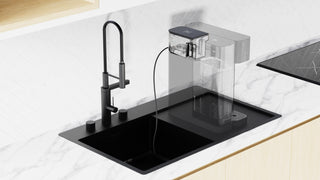
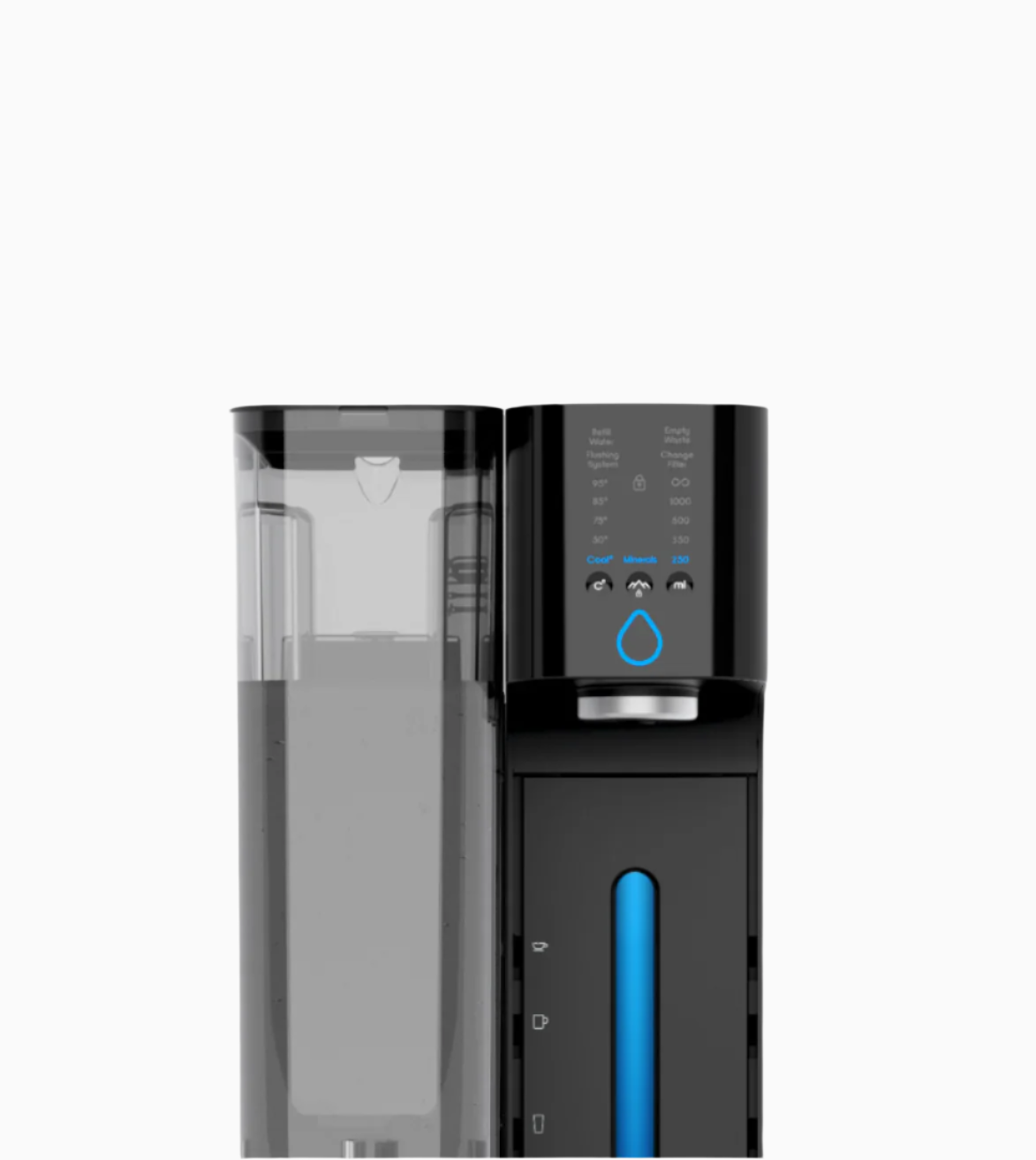
The middle ground works best: water with some minerals, but not the heavy load of hard tap water. Temperature matters too. Very hot water and long brewing can turn green tea dark and bitter, as a 2019 green tea brewing study in Molecules notes, which is why delicate teas are brewed below boiling. The Sküma® MY™ Station gives you four hot water temperatures and three MY™ Bases mineral profiles, so you can match both the heat and the minerals to what you are brewing.

| Drink | Water temperature | Sküma® MY™ Station setting |
|---|---|---|
| Green and white tea | Below boiling | 75 °C |
| Herbal tea, hot chocolate | Hot, not boiling | 85 °C |
| Black tea, coffee, instant soup | Close to boiling | 92 °C |
| Warm water to sip | Comfortably warm | 50 °C |
In short: a moderate mineral level and the right temperature make the best cup.
Is winter a good time to try a new MY™ Bases profile?
Yes. The change of season, as the weather turns colder and cold glasses give way to hot drinks, is a natural moment to try a different MY™ Bases profile, and on a subscription you can swap profiles at any time. The three profiles differ in how much mineral they add back to purified water and how they taste.
| Profile | Minerals added | What sets it apart | Taste |
|---|---|---|---|
| Soft | About 80 ppm | The lightest, mostly magnesium | Light and clean, closest to pure water |
| Plus | About 130 ppm | The only profile with sodium | Crisp and refreshing |
| Alkaline | About 170 ppm | Potassium-led, pH 8.5 | The fullest and roundest |
Soft's light mineral level suits delicate teas, in line with the research above. If you have only had Soft, the colder months are the time to try the others: Plus, the only profile with sodium, for a crisp, refreshing glass, or Alkaline, the fullest of the three. Alkaline's pH of 8.5 describes the water in the glass, and Sküma® makes no health claim for it. If your doctor has asked you to limit potassium, check with them before choosing Alkaline.
★★★★★
“The fact that the system filters the water and then adds minerals back in makes a noticeable difference to the taste.”
Mark, Sküma® customer, August 2026

In short: keep Soft for your tea, and use the colder months to try Plus or Alkaline.
Does the water you cook with matter in soup season?
The water in a soup, a stock or a pot of porridge ends up in the bowl, so it is worth starting with water you would happily drink. The Super-Filter in the Sküma® MY™ Station removes up to 99.9% of contaminants in independent laboratory testing, and hot water at 92 °C straight from the station gets stock, instant soups and porridge going without boiling a kettle.
In short: good soup starts with good water.
How do you get your Sküma® ready for winter?
The colder months mean more hot water, so a few minutes of preparation now keeps your MY™ Station running at its best through the season.
| Step | What to do | Why |
|---|---|---|
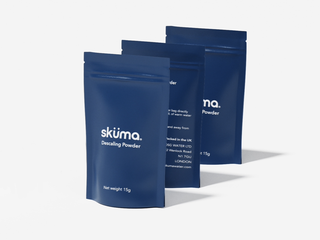
| 1. Descale | Run a descale with a Maintenance Kit pouch, then every eight weeks | Keeps the hot water circuit clear through the busiest months |
| 2. Check your Super-Filter | Note when it is due; it is replaced once a year on average | A fresh filter for the busiest months |
| 3. Set up your MY™ Bases | Adjust your subscription's timing, or swap to a new profile | No running out mid-winter |
| 4. Pick your hot settings | Get to know the 75, 85 and 92 °C settings for your drinks | The right water for every cup |

In short: descale, check the filter, stock up and set your temperatures before the cold arrives.
What should you drink if you catch a cold?
If you catch a cold, the NHS advises rest and plenty of fluids such as water to avoid dehydration, and a hot lemon and honey drink to soothe a sore throat, according to NHS 111 Wales. Water does not prevent colds, but hot water on demand makes warm drinks easier when you are under the weather.
In short: rest, drink plenty and keep warm drinks close at hand.
What to remember
You need about the same fluid in winter, roughly 6 to 8 cups or 1.5 to 2 litres a day, but research shows we drink less when it is cold. Drink steadily, count your soups and herbal teas, brew tea with water that has some minerals but not too many, and use the colder months to try a new MY™ Bases profile. Before the cold sets in, descale your MY™ Station, check your Super-Filter and set up your subscription.
FAQ: water in winter
Do you need to drink less water in winter?
No. The NHS advice of 6 to 8 cups, or 1.5 to 2 litres, of fluid a day applies all year. Research shows people drink less in winter, and a 2025 review in Nutrients found older adults dehydrated in cold months as well as hot ones, so it is worth drinking steadily through the day.
Do tea and coffee count towards your fluid intake?
Yes. Tea, coffee, milk and soup all count towards the 6 to 8 cups, or 1.5 to 2 litres, a day the NHS advises, according to King's College Hospital. Caffeinated drinks can have a mild dehydrating effect, so mix them with water and herbal teas.
What temperature should you make tea at?
Green and white teas are best brewed below boiling, because very hot water can turn them dark and bitter. Black tea and coffee need water close to boiling. On a Sküma® MY™ Station, that means 75 °C for green tea and 92 °C for black tea and coffee.
Does soup count as drinking water?
Soup counts towards your fluid intake. Around 20 to 30% of the water we take in comes from food, according to a 2025 review in Nutrients, and soups are among the easiest ways to add fluid at mealtimes.
What is the difference between the MY™ Bases profiles?
Soft is the lightest, at about 80 ppm of minerals, mostly magnesium, with a light, clean taste. Plus, at about 130 ppm, is the only profile with sodium and tastes crisp and refreshing. Alkaline is the fullest, at about 170 ppm, led by potassium, with a pH of 8.5.
Should you drink more water when you have a cold?
The NHS advises plenty of fluids, such as water, to avoid dehydration when you have a cold, along with rest and a hot lemon and honey drink for a sore throat. Water does not prevent colds, but it helps you stay comfortable while you recover.
Sources: Zhang et al., Seasonal fluctuation of total water intake and hydration status among young men and women, Frontiers in Nutrition (2025); King's College Hospital NHS Foundation Trust, Hydration matters (2026); NHS 111 Wales, Common cold (2024); Pence, Davis, Allen-Gregory and Bloomer, Hydration Strategies in Older Adults, Nutrients (2025); Giacomin and Fischer, Physics of Fluids (2021); Franks, Lawrence, Abbaspourrad and Dando, Nutrients (2019); Cao et al., Food Chemistry (2021); Jin et al., Molecules (2019); Sküma® customer survey of more than 300 users (2025); Sküma® customer review, August 2026; Sküma® MY™ Bases product page (2026); Sküma® independent laboratory testing, COFRAC-accredited laboratory (2025); FAQ Sküma® (2026). Last updated: 29/10/2026.
Note: this article is for information purposes and does not replace medical advice.