


We tend today to take it for granted that tap water is monitored.
Across the EU, it genuinely is subject to ongoing health surveillance: national health authorities carry out testing, and results are made available to the public. Water is often described by public health authorities as one of the most closely monitored products we consume.
But the monitoring we know today is much more recent than most people assume.
The modern framework for drinking water regulation was built up gradually over recent decades, shaped by scientific discoveries, evolving analytical techniques, and the emergence of new environmental risks.
And this history tells us something essential: regulation can only monitor what science is able to identify, measure and characterise.
PFAS are a particularly telling example. While these substances are now central to health and environmental concerns, systematic monitoring for them in drinking water is very recent. Across the EU, testing for PFAS in health monitoring only became mandatory from 12 January 2026.
The contamination discovered in the French Ardennes in 2025 shows very concretely what this gap between the emergence of a contamination, its detection, and its regulatory response can actually mean.
EU drinking water regulation is younger than you'd think
The history of water quality obviously doesn't begin in 1980.
Long before European standards existed, communities already paid attention to visible signs of water degradation. But this empirical, local monitoring should be distinguished from what we mean today by regulated health control of drinking water: defined parameters, limit values, analytical methods and testing frequencies.
It's really in the second half of the twentieth century that this system took shape.
1980: the first major EU directive on water for human consumption
The first major European framework specifically dedicated to the quality of water intended for human consumption was Directive 80/778/EEC of 15 July 1980.
It set common quality requirements and required member states to put in place the measures needed to bring their water into line.
This directive marked a genuine turning point: drinking water quality began to be thought of at a European scale, built around measurable, harmonised standards.
It was then transposed into the national law of each member state, for instance through Decree n°89-3 of 3 January 1989 in France, which governed water intended for human consumption and set out quality requirements, authorisation procedures and testing programmes.
1998: a new directive brings the standards forward
In 1998, the EU adopted Directive 98/83/EC, which progressively replaced the 1980 directive.
Its aim was in particular to adapt requirements to advancing scientific and technical knowledge. The text itself explains that experience gained in applying the previous regulation justified an evolution of the legal framework.
In France, this directive was notably transposed through Decree n°2001-1220 of 20 December 2001, and the framework was further updated by Decree n°2007-49 of 11 January 2007, which remains a key reference text on the health safety of drinking water.
In other words, within a few decades, the system moved from a patchwork of historic, national rules to a far more structured arrangement, built on defined health parameters, established analytical methods and organised monitoring.
Why does drinking water regulation keep changing?
Regulation isn't a fixed snapshot of what's “dangerous” or “safe”.
It evolves alongside knowledge.
When a substance becomes a concern, several steps are needed: identifying its presence, developing sufficiently reliable analytical methods, understanding its behaviour in the environment, studying exposure and potential effects, and then working out how to fold that knowledge into a monitoring and risk-management framework.
This means there's always a potential gap between a scientific concern emerging and its being reflected in a regulatory standard.
EU regulation itself acknowledges the need for this kind of adaptation to scientific and technical progress.
This is particularly visible when looking at the history of certain contaminants.
From nitrates to pesticides: when water quality becomes a public health issue
Nitrates are a good example of how a substance already present in the environment can gradually become a major public health topic.
Nitrates can occur naturally, but their presence in water resources can also be linked to human activity, particularly agriculture and certain urban or industrial discharges. Health authorities across Europe recognise nitrates as a parameter requiring monitoring across raw water sources, treated water and the distribution network.
In very young children, particularly under six months old, nitrates can be converted into nitrites. These can alter haemoglobin and reduce its ability to carry oxygen, causing methaemoglobinaemia, also known as “blue baby syndrome”.
It's partly to protect the most vulnerable groups that the regulatory limit for nitrates in water intended for human consumption is set at 50 mg/L across the EU.
This case is interesting because it shows that regulation doesn't simply measure what's present in water: it aims to translate scientific knowledge into management values designed to protect the population.
Regulation built up in successive layers
The history of drinking water standards isn't the story of one great monitoring system appearing all at once.
It's a gradual construction instead.
Over the decades, new parameters have been added, certain values reassessed, analytical methods refined, and monitoring arrangements updated.
Today's system rests on several stages:
monitoring of water resources → treatment → health control → distribution → consumer information.
National health authorities publish the results of this health monitoring, made accessible to the public, often area by area.
And this logic keeps evolving.
2026: a new stage with PFAS monitoring
PFAS, or per- and polyfluoroalkyl substances, illustrate this evolution particularly well.
This vast family of chemical substances includes several thousand compounds used across many industrial and everyday applications. Their strong persistence in the environment has earned them the nickname “forever chemicals”.
Certain PFAS are now subject to particularly significant toxicological attention.
In 2023, the International Agency for Research on Cancer (IARC) classified PFOA as carcinogenic to humans (Group 1) and PFOS as possibly carcinogenic to humans (Group 2B).
But the question of monitoring them in drinking water is much more recent.
The recast EU Drinking Water Directive, (EU) 2020/2184, sets a parametric value of 0.10 µg/L for the sum of monitored PFAS, and 0.50 µg/L for the broader “Total PFAS” parameter, according to the terms set out in the text. Testing for PFAS as part of routine health monitoring became mandatory across the EU from 12 January 2026.
In France, this directive was transposed in particular through Decree n°2022-1720 of 29 December 2022, and further detailed through Decree n°2025-1287 of 22 December 2025, which entered into force on 1 January 2026 and specifies the list of 20 PFAS to be tested for, alongside 6:2 FTSA and TFA, both due to be added from 1 January 2027.
An important clarification: monitoring PFAS doesn't mean monitoring “all PFAS”
This is an essential point for understanding the limits inherent to any regulation.
The PFAS family is extremely vast. Regulation therefore defines priority substances or groups of substances, along with associated monitoring methods.
This doesn't mean every existing molecule is systematically tested for in every analysis.
The question isn't only:
“What's the regulatory threshold?”
It's also:
“Which substances are being tested for, using what method, and how often?”
This is an essential distinction when talking about tap water quality.
PFAS in the Ardennes: when contamination precedes regulation
The case of the Ardennes, in eastern France, is a particularly telling example.
In July 2025, the local prefect, acting on a proposal from the regional health agency (ARS Grand Est), banned tap water from being used for drinking or preparing baby formula for around 2,800 residents across 12 communes. The order took effect on 10 July.
The communes affected included Villy, Malandry, Blagny, Linay, Haraucourt, Bayonville, Beffu-et-le-Morthomme, Landres-et-Saint-Georges, Thenorgues, Imécourt and Verpel, as well as the hamlet of Sivry.
A few weeks later, on 1 August 2025, the restriction was extended to La Ferté-sur-Chiers, affecting a further 176 residents.
At Villy, a concentration of 2.729 µg/L, or 2,729 ng/L, had been measured in February 2025. That was more than 27 times the 0.1 µg/L threshold applicable to the sum of PFAS concerned at the time. This figure was also cited in a written question to the French National Assembly.
A contamination that probably predates 2025
The Ardennes case raises a particularly important question: how long had this contamination actually been present?
Earlier reports referenced in the case file point to contamination around catchment areas and the historic use of industrial sludge.
But caution is needed on the exact causation: the pollution's origin shouldn't be presented as definitively established without referring to the official conclusions of the investigations.
What is documented, however, is the health decision taken in 2025 in response to persistent, significant exceedances of the applicable values.
What the Ardennes case shows about the limits of water monitoring
The point of this example isn't to claim that “tap water isn't monitored”.
That would be false.
Across the EU, drinking water is subject to continuous health monitoring, and non-compliance situations are governed by a precise procedure. Where an exceedance presents a health risk, authorities can impose usage restrictions and require corrective measures.
The real lesson is different.
Regulatory monitoring is necessarily defined by the knowledge and methods available at a given point in time.
A substance has to be identified.
It has to be measurable.
Sufficient toxicological data has to exist to characterise the risk.
It then has to be worked out how to fold that into a regulatory framework.
And large-scale testing has to be put in place.
Between the first scientific alert and systematic monitoring, several years can therefore pass.
Is a substance that isn't tested for necessarily absent?
No.
And that's probably one of the most important ideas to take away when it comes to tap water quality.
The absence of a detection isn't necessarily proof of absence.
It may simply mean a substance isn't included in the monitoring programme in question, isn't part of the testing panel, or that available methods don't yet allow it to be characterised with sufficient precision.
That obviously doesn't mean a given water supply is dangerous.
It means that regulatory monitoring and scientific knowledge are never entirely fixed.
That's precisely why regulation keeps evolving.
And it's also why the emergence of new contaminants in public debate, PFAS, TFA, certain pharmaceutical residues, microplastics or other emerging substances, regularly leads to new research and new analytical methods.
Is current regulation enough to guarantee water completely free of contaminants?
Two things need distinguishing.
Water that complies with regulation is water that meets the applicable regulatory requirements.
That doesn't mean it's chemically “pure”, or that it contains absolutely no detectable substance at all.
National health authorities regularly point out that drinking water is subject to continuous health monitoring, with publicly available data.
Regulation sets quality limits and quality reference values for certain parameters. It's therefore a health risk-management system, not a promise that absolutely no molecule foreign to water is present.
This distinction matters.
It helps explain both why EU tap water is tightly regulated, and why the standards keep evolving.
Why can filtering water provide an additional barrier?
Regulation sets a health safety baseline for the water that's supplied.
But some consumers may want to go further with how they treat their water at home, particularly by targeting certain families of substances.
This is where filtration technologies come in.
They don't all work the same way.
Activated carbon relies mainly on adsorbing certain molecules. Filtration membranes can retain particles or certain microorganisms depending on their cut-off threshold. Reverse osmosis, meanwhile, can reduce a wide range of dissolved substances.
The choice of technology therefore depends on which substances you want to target and the characteristics of the water going in.
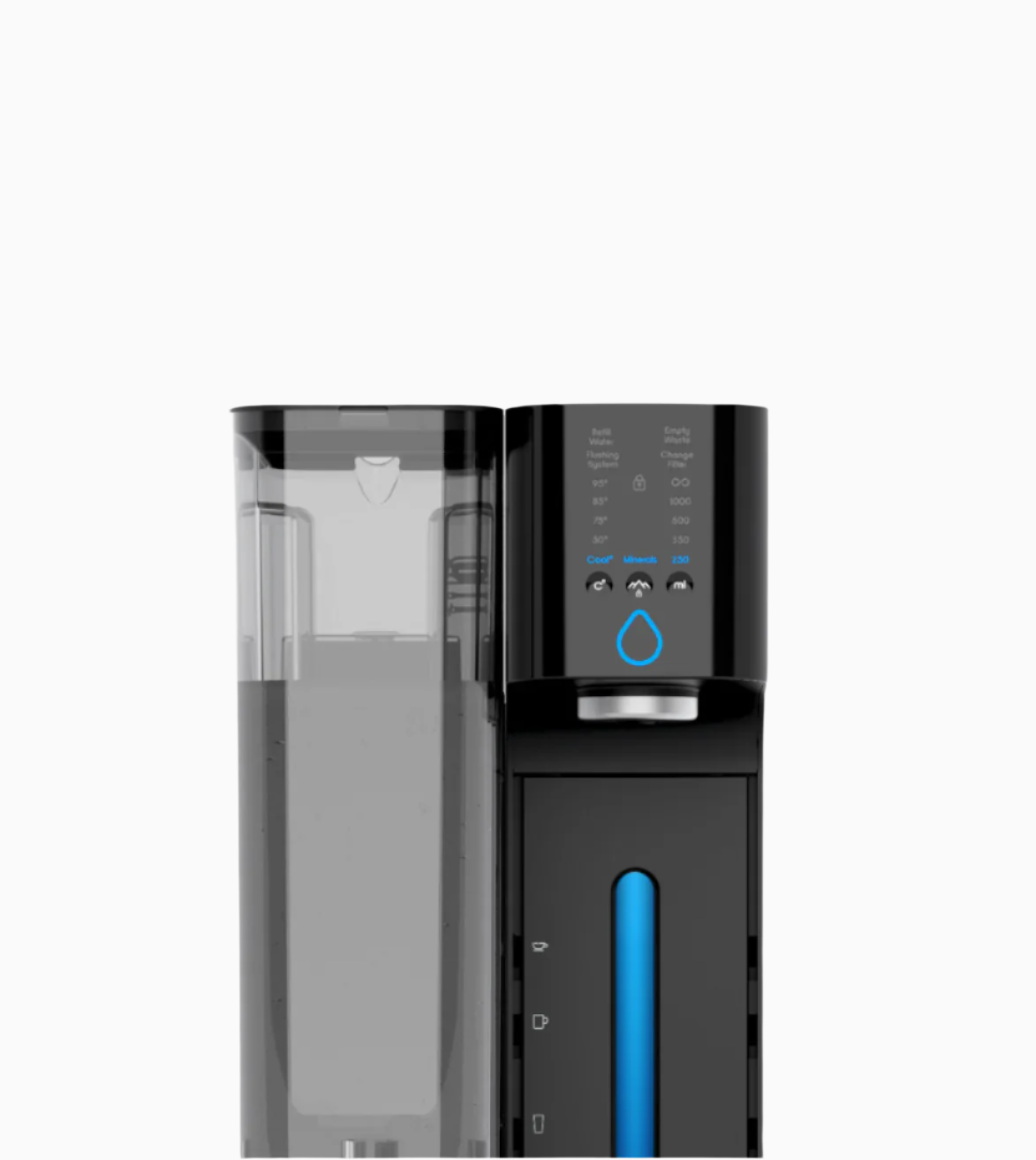
At Sküma Water, this thinking sits at the heart of the Super-Filter, which combines sediment pre-filtration, activated carbon and a reverse osmosis membrane.
The goal isn't to assume one technology can “remove everything”, but to combine several complementary filtration mechanisms.
Can you check the quality of your own tap water?
Yes.
Drinking water health monitoring results are made public and can generally be checked area by area through national or regional health authorities.
That's probably the first thing worth doing before drawing any general conclusion about the water quality at your own address.
It's also worth distinguishing between:
water quality as it leaves the treatment works;
water quality within the distribution network;
water quality at the consumer's own tap;
water quality after passing through a home filtration system.
These different stages aren't necessarily equivalent.
What this history really teaches us
The history of EU drinking water regulation isn't one of no regulation at all until 1980, followed by a sudden leap to perfection.
It's a story of gradual construction instead.
From the earliest European directives to national standards, from Directive 98/83/EC to the recast Directive (EU) 2020/2184, the parameters monitored and the methods used have evolved alongside scientific knowledge.
PFAS are today one of the clearest examples of this.
Since 1 January 2026, testing for them has become mandatory as part of EU-wide health monitoring of water intended for human consumption.
But this evolution doesn't mean every substance of tomorrow's concern is already known today.
Regulation evolves because science evolves.
And that's perhaps the main lesson here: once a new substance becomes measurable, documented and sufficiently concerning, it can gradually move from being an emerging contaminant to a monitored parameter.
Between the two, there's necessarily a period of research, assessment and decision-making.
FAQ: Drinking water quality and regulation
Since when has drinking water been regulated in the EU?
Modern regulation was built up gradually. Directive 80/778/EEC of 1980 represents the first major EU-wide framework on the quality of water intended for human consumption. The framework was then revised by Directive 98/83/EC of 1998, and modernised further through several texts, including the recast Directive (EU) 2020/2184.
Who checks tap water quality?
Health monitoring of water intended for human consumption is carried out by national or regional health authorities in each EU member state. Results are made publicly available.
What parameters are checked in drinking water?
Health monitoring covers numerous microbiological, chemical, physical and organoleptic parameters. The exact list depends on the applicable regulatory framework and monitoring programmes, and evolves regularly alongside scientific knowledge and EU requirements.
Is PFAS monitored in tap water?
Yes. Across the EU, testing for PFAS as part of health monitoring of water intended for human consumption became mandatory from 1 January 2026.
What's the regulatory limit for PFAS in drinking water?
The recast EU Drinking Water Directive (EU) 2020/2184 sets a value of 0.10 µg/L for the “Sum of PFAS” and 0.50 µg/L for “Total PFAS”, according to the definitions and terms set out in the text.
Why are PFAS a concern?
PFAS form a vast family of persistent substances. Some are subject to significant health concerns. The IARC has classified PFOA as carcinogenic to humans and PFOS as possibly carcinogenic to humans.
What happened in the Ardennes in 2025?
In July 2025, tap water was banned for drinking and preparing baby formula across several communes in the French Ardennes, due to persistent, significant PFAS exceedances. A concentration of 2,729 ng/L was recorded at Villy in February 2025. The restriction was later extended to La Ferté-sur-Chiers in August.
Is water that meets regulatory standards completely free of contaminants?
No. Compliance means water meets the regulatory requirements applicable to monitored parameters. It doesn't necessarily mean no detectable substance is present at all.
Why are new contaminants added to testing programmes?
Because regulation evolves alongside scientific knowledge, analytical capabilities, and the identification of new risks. EU Directive 98/83/EC already recognised the need to adapt the framework to scientific and technical progress; that same logic continues with Directive (EU) 2020/2184.
Can I check my own tap water quality?
Yes. Drinking water health monitoring results are published and can generally be checked area by area through your national or regional health authority.
Note: this article is for information purposes and does not replace medical advice. Any specific question about suspected exposure to a contaminant should be directed to a healthcare professional.