

26 July is World Grandparents' and Elderly People's Day, a fitting moment to look at something as common as it is easy to miss: as we age, the sensation of thirst fades. It isn't forgetfulness or carelessness, it's a signal that genuinely weakens, which is exactly what makes dehydration in older people so quiet.
Why thirst declines with age
The thirst signal originates in a structure of the brain called the subfornical organ, part of the hypothalamus, which becomes less responsive with age. An older person can genuinely run low on fluids without feeling the urge to drink. One study measured, through a simple blood test, that 56% of older participants were physiologically dehydrated, even though most reported drinking what they considered adequate amounts.
Two other changes compound this: the proportion of water in the body, which drops from around 60% in a young adult to around 50% in an older person, and kidneys that become less efficient at retaining fluid. Reserves are smaller, and the warning signal arrives later, if at all.
A very real emergency, right now
This isn't a theoretical concern. A rapid analysis by the London School of Hygiene & Tropical Medicine, Imperial College London and the Met Office, published on 13 July 2026, estimated more than 2,700 excess deaths from heat-related causes in England and Wales during the May and June 2026 heatwaves, around 550 in May and 2,200 in June. People aged over 85 accounted for roughly 60% of those deaths. The June heatwave triggered only the second Red Extreme Heat Warning ever issued by UKHSA and the Met Office.
UKHSA's own guidance is direct on this point: during periods of heat, look out for those who may struggle to cope, particularly older people, and check on elderly relatives and neighbours. It's precisely because dehydration progresses without a clear warning sign that it becomes dangerous at home, out of anyone's sight.
The real danger of silence
This is where it gets concerning: sudden confusion in an older person is often wrongly put down to cognitive decline setting in, when it's frequently an episode of delirium, an acute confusional state that's reversible, with dehydration among its most common causes alongside urinary tract infections. Unlike dementia, which develops gradually, this type of confusion appears within hours or days.
This isn't something to diagnose at home, a sudden change in behaviour in an older person warrants prompt medical advice, but it's a useful reminder that confusion isn't always what it first appears to be.
Good habits to adopt
Drink at set points in the day rather than waiting to feel thirsty: on waking, with each meal, mid-afternoon.
Keep a glass or bottle of water visible and within reach, in the room where the person spends most of their time.
Spread fluid intake across the day rather than large amounts at once, around 1 to 1.5 litres of water a day is the usual benchmark.
Be extra vigilant during hot weather, fever or illness: needs go up, but the thirst signal doesn't adjust to match.
During a heatwave, check in on an older or isolated relative regularly, UKHSA's core advice during any heat alert. If you're worried about their health, NHS 111 can advise.
Water quality matters too
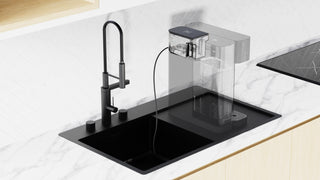
Many older adults are advised to watch their sodium intake, which makes some shop-bought mineral waters, naturally high in sodium, not always the easiest everyday choice. Mineral Soft, the remineralising profile for the MY™ Station, delivers magnesium, potassium and calcium in measured amounts, with no added sodium. A profile built to stay light, simple to fold into daily life, without complexity or excess.
On 26 July, or at any point in the year, one simple gesture goes a long way: when you visit or call your grandparents or older people in your life, check they still have water within reach. It isn't much, and it's often enough.
Frequently asked questions
Can dehydration cause confusion that looks like dementia?
Yes, it's one of the most common causes of sudden confusion in older people, and it's reversible once treated. Medical advice is still needed to confirm the cause.
How much water should an older person drink a day?
The usual benchmark is 1 to 1.5 litres of water a day, on top of the water that comes from food.
Is Mineral Soft suitable for people watching their sodium intake?
It contains no added sodium. Any question tied to a specific medical condition should be directed to a doctor.
What should I do during hot weather to protect an older relative?
Check on them regularly, make sure they're drinking fluids and that their home stays cool. NHS 111 can advise if you're concerned about their wellbeing.
Sources
London School of Hygiene & Tropical Medicine, Imperial College London and the Met Office, rapid analysis of excess deaths during the May and June 2026 heatwaves, 13 July 2026
UK Health Security Agency (UKHSA), guidance on the health impacts of heat and adverse weather, July 2026
Phillips P.A. et al., Influence of Age on Thirst and Fluid Intake, Physiology & Behavior
Frontiers in Molecular Biosciences, Dehydration and Cognition in Geriatrics: A Hydromolecular Hypothesis, 2016
Disturbances of thirst and fluid balance associated with aging, Autonomic Neuroscience
MSD Manuals, professional edition, delirium
Note: this article is for information only and does not replace medical advice. Any sudden confusion or behaviour change in an older person warrants prompt consultation.