

How much calcium, magnesium or sodium should your child actually be drinking each day? It sounds like a minor question. It isn't. A growing child's mineral needs aren't the same as an adult's, and the reference values published by the UK's Scientific Advisory Committee on Nutrition (SACN) and the European Food Safety Authority (EFSA) confirm it in black and white. Here's what the science says, and how Mineral Soft, the remineralising profile for the MY™ Station, was formulated to match it, without ever overdoing it.
Why purified water needs remineralising
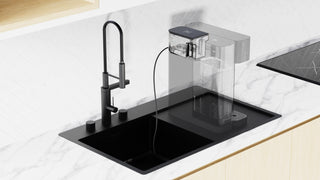
The MY™ Station purifies tap water through reverse osmosis, a filtration technology capable of removing more than 99% of dissolved contaminants, pesticides, heavy metals and PFAS included. That performance comes with a trade-off: the membrane also strips out the minerals naturally present in water. Unremineralised RO water typically shows calcium and magnesium levels below 1 mg per litre, close to detection limits.
According to the World Health Organization's guidelines for drinking-water quality, exclusive, long-term consumption of demineralised water without a complementary mineral intake isn't recommended. That's exactly what the MY™ Bases are for: reintroducing the necessary minerals into purified water, in controlled proportions.
A growing child's mineral needs, mineral by mineral
Reference values for infants, children and teenagers have been reassessed in detail by European and UK nutrition authorities over the past decade. Four minerals deserve particular attention when it comes to children.
Calcium, the priority for bone growth
Calcium is the most abundant mineral in the body: around 99% of it sits in the skeleton. In children, growth demands intensive bone mineralisation, which makes calcium intake particularly sensitive. It's also one of the few nutrients where UK data shows a real shortfall: according to the National Diet and Nutrition Survey (NDNS), 15% of children aged 11 to 18 had calcium intakes below the Lower Reference Nutrient Intake.
Water doesn't replace dairy, pulses or vegetables as the main sources of calcium, but it adds a modest, genuine contribution alongside them.
Magnesium, understated but essential
Magnesium is involved in more than three hundred enzymatic reactions in the body, including cellular energy production, muscle contraction and nervous system function. EFSA sets an adequate intake ranging from 170 to 300 mg a day for children, depending on age. It's one of the minerals hardest to obtain from a modern diet alone, which makes it a good candidate for a complementary source through drinking water.
Potassium, for fluid balance
Potassium works alongside sodium to regulate the exchange of water between cells and to maintain stable blood pressure. In children as in adults, it also supports muscle contraction and nerve signalling.
Sodium, the one mineral not to overdose
This is the most well documented point, and the one most often overlooked when choosing a remineralised water for a child. EFSA's reference values for sodium rise progressively with age: 1.1g a day between 1 and 3 years, 1.3g between 4 and 6 years, 1.7g between 7 and 10 years, then 2g between 11 and 17 years. The UK's own SACN sets matching safe intake levels for young children, so European and UK guidance line up on this point.
The French food safety agency ANSES has documented a precise mechanism behind this: a high sodium intake increases urinary calcium losses and can reduce calcium balance, and therefore bone mineralisation. Some research even suggests that abnormalities in calcium metabolism linked to elevated blood pressure, detected in childhood, may persist into adulthood. A mineral profile designed for sports performance, which adds sodium to offset losses from exercise, has no real place in the glass of a child without an intense daily activity level.
What Mineral Soft actually delivers
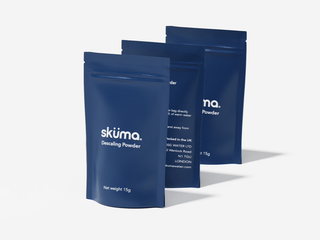
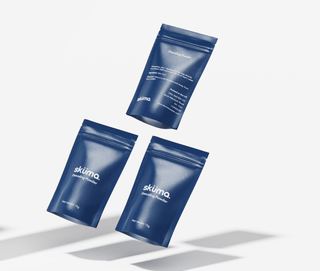
Each Mineral Soft pouch remineralises up to 40 litres of purified water with, per 2 litres:
Magnesium: 35.9 mg
Potassium: 2.6 mg
Calcium: 2.7 mg
Sodium: no added sodium
It's a deliberately light profile: it isn't designed to cover a child's full reference intake on its own, which drinking water never does entirely, but to provide a clean mineral base without the extra salts a sedentary child doesn't need. Not too much, not too little.
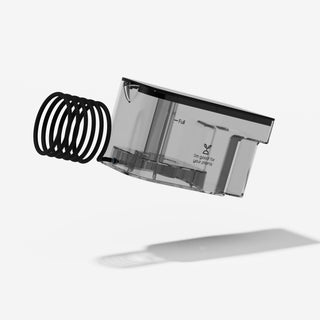
That same care in the dosage carries over to how you look after the bottle. Cleaning and sterilising your mineral bottle regularly is a simple habit, but one that matters even more when the whole family drinks this water every day.
Are Boost and Alkaline suitable for children?
Here's the composition of the three MY™ Bases profiles, normalised per litre for a direct comparison:
|
Profile |
Magnesium |
Potassium |
Calcium |
Sodium |
pH |
|
Mineral Soft |
18.0 mg/L |
1.3 mg/L |
1.4 mg/L |
0 mg/L |
neutral |
|
Mineral Boost |
28.7 mg/L |
9.6 mg/L |
0.8 mg/L |
7.1 mg/L |
neutral |
|
Mineral Alkaline |
3.0 mg/L |
124.8 mg/L |
4.1 mg/L |
0 mg/L |
8.5 |
Mineral Boost adds sodium and a higher overall mineral concentration, designed to offset losses from intense physical activity: a sensible profile for an active teenager or adult, not for a child's everyday water. Mineral Alkaline raises the pH to 8.5 and concentrates potassium heavily, aimed at digestive comfort in adults. Neither is flagged as posing a risk for occasional use by a child, but neither offers any added benefit over Mineral Soft for everyday family use.
Frequently asked questions
Which Sküma mineral profile suits a child best?
Mineral Soft, formulated with no added sodium and a calibrated mineral intake, with no need to switch to another profile.
Is unremineralised RO water dangerous for a child?
Technically drinkable, it simply isn't recommended for exclusive, long-term consumption by the WHO, for lack of mineral content. That's exactly what the MY™ Bases are for.
Can a child drink Mineral Boost or Mineral Alkaline?
Occasionally, there's nothing to suggest a risk. Day to day, Mineral Soft remains more suitable, since it contains no added sodium and offers a more measured mineral intake.
Sources
ANSES (French food safety agency), Actualisation des références nutritionnelles en vitamines et minéraux pour la population française, 2021
EFSA, Scientific Opinion on Dietary Reference Values for magnesium, EFSA Journal, 2015
EFSA, Scientific Opinion on Dietary Reference Values for sodium, EFSA Journal, 2019
EFSA, Scientific Opinion on Dietary Reference Values for calcium, EFSA Journal, 2015
UK Scientific Advisory Committee on Nutrition (SACN), Feeding young children aged 1 to 5 years, Annex 1
National Diet and Nutrition Survey (NDNS), UK Government, results from years 9 to 11 (combined) – statistical summary, gov.uk
World Health Organization (WHO), Guidelines for Drinking-water Quality
Note: the SACN/EFSA/ANSES figures cited relate to overall dietary intake (food plus drink), not water alone. They're included here as a scientific benchmark, not a claim that Mineral Soft covers a child's needs on its own.