


The short answer: at everyday amounts, coffee does not dehydrate you, and it counts towards your daily fluid. In a 2017 trial, regular coffee drinkers passed no more urine in the three hours after 200 ml of coffee containing about 269 mg of caffeine, two to three cups' worth, than after the same amount of water: 316 ml against 356 ml.
The limit is the dose. In the same trial, a single 200 ml coffee containing about 537 mg of caffeine, roughly five cups' worth, raised urine output to 613 ml and increased the sodium and potassium lost in it. Coffee can be part of a well-hydrated day, as long as water does most of the work.
Here is what the research measured, where caffeine starts to matter, and how to keep coffee in its place in your hydration.
Does coffee dehydrate you?
Not at everyday amounts. Two controlled trials found no difference in urine output or fluid balance between moderate caffeine and plain water. Only a very large single dose of coffee changed the result.
| Caffeine in one serving | Effect compared with water | Source |
|---|---|---|
| Up to 400 mg in 1 litre of drink | No change in urine output or fluid balance over 4 hours | International Journal of Sport Nutrition and Exercise Metabolism, 2019 |
| About 269 mg in 200 ml of coffee | No change in urine output over 3 hours | Frontiers in Nutrition, 2017 |
| About 537 mg in 200 ml of coffee | About 257 ml more urine over 3 hours, with more sodium and potassium lost | Frontiers in Nutrition, 2017 |
In short: everyday coffee, no. A very strong coffee in one go, yes, for the following hours.
Does coffee count towards your water intake?
Yes. The NHS recommends 6 to 8 cups or glasses of fluid a day, and counts water, lower-fat milk and lower-sugar drinks, including tea and coffee, towards that total. Coffee has limits water does not, so water should make up most of your fluid.
| Water | Coffee | |
|---|---|---|
| Counts towards daily fluid (NHS) | Yes | Yes |
| Caffeine | None | About 100 mg in a cup of instant coffee, more in filter or coffee-shop coffee (NHS) |
| Daily limit | None | 400 mg of caffeine a day for healthy adults, all sources combined (UK guidance) |
| Very strong single serving | Not applicable | More urine, sodium and potassium lost over 3 hours (Frontiers in Nutrition, 2017) |
In short: coffee counts, but a well-hydrated day is built on water.
What does the research show for regular coffee drinkers?
In a 2017 crossover trial published in Frontiers in Nutrition, 10 habitual coffee drinkers (1 to 3 cups a day) were given 200 ml of water, or 200 ml of coffee at 3 mg or 6 mg of caffeine per kg of body weight, about 269 mg and 537 mg. The doses were set by body weight, with participants averaging 89.5 kg, so each drink held the caffeine of two to three, or about five, cups of instant coffee. Over three hours, the lower dose gave the same urine output as water. The higher dose raised it to 613 ml, against 356 ml after water, and increased sodium and potassium excretion.
In a 2019 study published in the International Journal of Sport Nutrition and Exercise Metabolism, 12 healthy men were given 1 litre of drinks containing up to 400 mg of caffeine per litre. Caffeine had no effect on urine output or fluid balance over four hours. Both studies were small and short.
Verdict: in regular coffee drinkers, a moderate dose of caffeine hydrates like water. A single dose of about 537 mg does not.
Is coffee a diuretic?
Caffeine is a mild diuretic at high doses. The belief that every cup dries you out traces back to a small 1928 study in people who had gone without caffeine. Recent trials in regular coffee drinkers found an effect at about 537 mg in one serving and none at about 269 mg.
In short: rarely in practice.
How much caffeine is too much for hydration?
UK guidance from the Food Standards Agency and Food Standards Scotland says up to 400 mg of caffeine a day, from all sources, is unlikely to cause adverse effects in healthy adults. The NHS advises no more than 200 mg a day in pregnancy. The single dose that raised urine output in research, about 537 mg, is above the daily limit on its own.
| Drink | Caffeine per serving (NHS) |
|---|---|
| Cup of instant coffee | About 100 mg (filter and coffee-shop coffee can contain more) |
| Cup of tea, black or green | About 75 mg |
| 250 ml can of energy drink | About 80 mg |
| Can of cola | About 40 mg |
In short: stay within 400 mg a day and caffeine is not a hydration problem.
Should you drink a glass of water with every coffee?
You do not need one to cancel out a normal cup: at moderate doses, coffee hydrates like water. A glass alongside still adds plain water to your day. It matters more when strong coffees come close together.
In short: not required, but a good habit, especially with strong coffee.
What temperature should you brew coffee at?
Around the low 90s °C. A 2020 study in Scientific Reports found that drip coffee brewed at 87°C, 90°C and 93°C tasted almost the same when strength and extraction were held constant. The Specialty Coffee Association's standard for brewing water also asks for some calcium hardness and alkalinity, a neutral pH and no chlorine, so water with no minerals at all falls outside it.
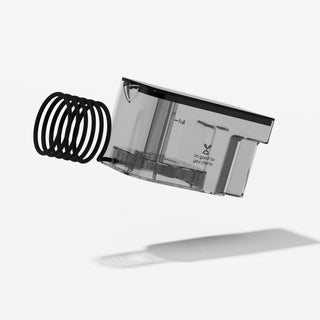
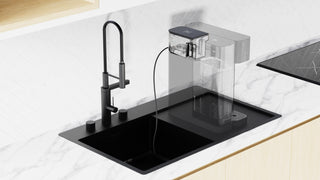
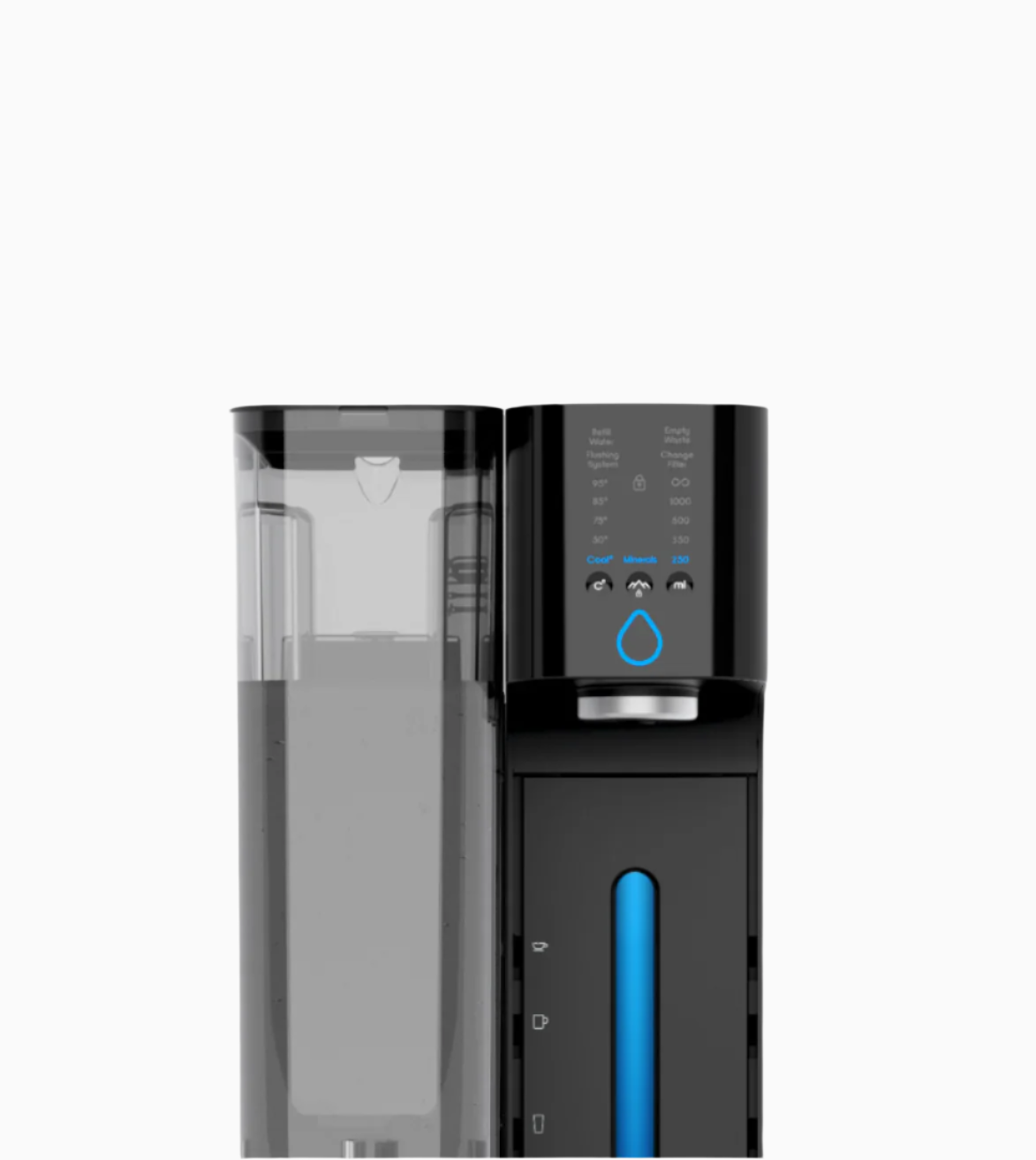
The MY™ Station heats purified water as it pours, to 50°C, 75°C, 85°C or 92°C, and delivers the minerals from your MY™ Base into hot water too. At 92°C, your coffee water is in the range brewers use.
In short: brew at around 92°C, with clean water that still carries minerals.
How does Sküma help coffee drinkers stay well hydrated?
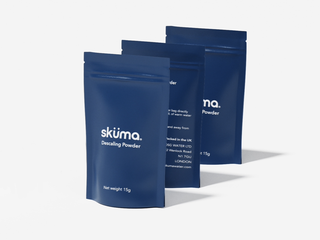
The MY™ Station's three-stage Super-Filter rejects up to 99.9% of contaminants through reverse osmosis, and minerals go with them. It adds minerals back with a MY™ Base, dosed into every glass and into hot water too. For coffee drinkers, that means everyday water that carries minerals rather than none, and brewing water that is clean without being stripped bare.
| MY™ Base | Minerals | Profile |
|---|---|---|
| Soft | Magnesium, potassium, calcium | Everyday drinking water |
| Plus | Sodium, magnesium, potassium, calcium; 57.3 mg of magnesium per 2 litres | An elevated mineral profile for maintaining normal muscle function |
| Alkaline | Potassium; 312.1 mg of potassium per 2.5 litres | An alkaline mineral profile for maintaining normal nervous function, increasing pH by 1.5 |
The two minerals the 2017 trial found were lost in greater amounts after a very strong coffee were sodium and potassium. The Plus and Alkaline Bases add those minerals to your water, so your everyday hydration carries them.
In short: purified water, minerals added back, and the same water for your glass and your coffee.

What to remember
Coffee does not dehydrate you at everyday amounts and counts towards your daily fluid. Only a single serving of about 537 mg of caffeine raised urine output and sodium and potassium losses, more than the 400 mg daily limit for healthy adults. Keep coffee within that limit, make mineralised water most of your fluid, and brew at around 92°C.
FAQ: coffee and hydration
Does coffee dehydrate you?
No, not at everyday amounts. In a 2017 trial, coffee with about 269 mg of caffeine, two to three cups' worth, gave regular coffee drinkers the same urine output as water.
Is coffee a diuretic?
Mildly, at high doses. Research found an effect at about 537 mg of caffeine in one serving, roughly five cups' worth, and none at about 269 mg.
Does coffee count towards my daily water intake?
Yes. The NHS counts tea and coffee towards the 6 to 8 cups or glasses of fluid it recommends a day.
How much caffeine is in a cup of coffee?
About 100 mg in a cup of instant coffee, according to the NHS.
How much caffeine is safe in a day?
Up to 400 mg a day for healthy adults, according to UK guidance, and no more than 200 mg a day in pregnancy, according to the NHS.
Should I drink water with my coffee?
It is not needed to offset a normal cup, but it adds plain water to your day.
What temperature should I brew coffee at?
Around the low 90s °C. The MY™ Station pours hot water at 92°C, with minerals delivered into hot water too.
Sources: Seal et al., Frontiers in Nutrition (2017); Maughan et al., International Journal of Sport Nutrition and Exercise Metabolism (2019); NHS, Water, drinks and your health (2023); NHS, Foods to avoid in pregnancy (2026); Food Standards Agency and Food Standards Scotland, Food supplements containing caffeine (2024); Batali et al., Scientific Reports (2020); Specialty Coffee Association, Coffee Standards. Last updated: 19/11/2026.
Note: this article is for information purposes and does not replace medical advice.