


A TDS reading tells you how much dissolved mineral is in your water. It does not tell you whether the water is safe to drink.
That is why three well-known countertop systems, AquaTru, the Ninja HydraSense and the Sküma® MY™ Station, can put three very different numbers on the same meter and each be doing exactly what it was built to do.
Here is what the number measures, what it misses, and how the three systems compare.
What is TDS in water?
TDS stands for total dissolved solids. The World Health Organization describes it as the inorganic salts dissolved in water, principally calcium, magnesium, potassium, sodium, bicarbonates, chlorides and sulphates, plus a little organic matter.

In hard-water areas like London, much of that total is calcium and magnesium: the same minerals that make water hard and leave scale in a kettle.
In short: TDS is a measure of minerals, mostly the ordinary ones.
What does a TDS meter actually measure?
A pocket TDS meter does not weigh anything. It measures how well the water conducts electricity, which rises with the amount of dissolved salt, and converts that into parts per million (ppm, the same as milligrams per litre) with a fixed factor. A 2018 review of the method puts that factor at about 0.65 for fresh water, within a range of 0.55 to 0.75.

Thames Water's 2025 report for London's City supply zone gives a mean conductivity of 593 µS/cm, with a total hardness of 266 ppm as calcium carbonate. On a typical meter, that reads as roughly 385 ppm.

In short: a TDS meter reads conductivity and estimates the rest.
Is a low TDS reading a sign of safe water? What the evidence says
No. The WHO's Guidelines for Drinking-water Quality set no health-based limit for TDS: reliable data on health effects are not available, and TDS is not of health concern at the levels found in drinking water.
The contaminants people buy filters for sit far below what a meter can see. The EU limit for lead is 10 µg/l, falling to 5 µg/l by 2036, and for the sum of PFAS it is 0.10 µg/l. Against a reading of around 385 ppm, lead at its legal limit would change the number by 0.01 ppm at most. Bacteria are not dissolved salts, so they do not register at all.

Verdict: TDS tells you about minerals and taste, not about safety.
What does TDS change in the glass?
Mostly the taste. The WHO sets no health-based value for TDS and treats dissolved minerals as a question of taste: they are much of what makes one water taste different from another.

UK and EU law ask that water should not be aggressive, meaning corrosive to pipes, and set no minimum mineral content. The WHO says there is not enough scientific information on long-term drinking of very low-mineral water to recommend for or against it.
For everyday drinking, water below about 500 ppm usually tastes better. Above that, a salty, mineral taste and scale become more noticeable. The US EPA uses 500 mg/l as a guide for taste and appearance, not as a safety limit.
Taste research points to the middle. A 2025 sensory study found people preferred water whose minerals they could only just taste, and liked it less as the minerals rose further.

Verdict: below about 500 ppm, water tastes best day to day. Within that, the right level is a matter of personal taste.
How do AquaTru, Ninja HydraSense and the Sküma® MY™ Station compare?
The three systems were built on different ideas of what should be left in the glass, and the TDS reading follows from that choice.

| AquaTru Classic | Ninja HydraSense | Sküma® MY™ Station | |
|---|---|---|---|
| How it filters | Pre-filter and carbon, reverse osmosis, VOC carbon | Pressure-driven filter media, not reverse osmosis | Carbon block, sediment filter, reverse osmosis |
| What happens to TDS | Average 87.1% reduction in its certification test | Designed to keep calcium, magnesium and potassium | Lowered by reverse osmosis; total hardness 315 to 14 ppm in a 2025 lab test |
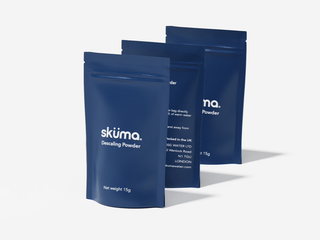
| Minerals back in | Optional alkaline mineral filter or drops | Keeps what the tap has, adds none | MY™ Bases: about 80 to 170 ppm, by profile |
| Independent testing | IAPMO R&T: NSF/ANSI 42, 53, 58, 401 | SharkNinja cites IAPMO R&T: NSF/ANSI 42, 53, 401 | COFRAC-accredited French lab: 229 contaminants, spiked tap water |
AquaTru and the MY™ Station both use reverse osmosis. A membrane fine enough to hold back dissolved contaminants also holds back dissolved minerals, so water cannot be purified to that level without lowering its TDS. NSF/ANSI 58, the standard for reverse osmosis systems, asks for a TDS reduction of at least 75%, and AquaTru's own guide says a reading of 10 to 50 ppm after its filter can be completely normal. The Ninja HydraSense has no reverse osmosis: it is built to leave the minerals in, so its reading stays close to the tap.
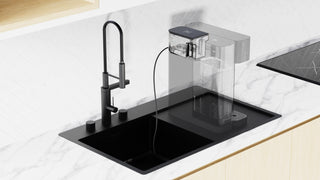
The AquaTru Classic and the MY™ Station both sit on the counter and are filled by hand. AquaTru also sells an under-sink model that connects to the water supply.
Verdict: a lower number is not a better filter. It is a different design.
Where does the Sküma® MY™ Station fit in?
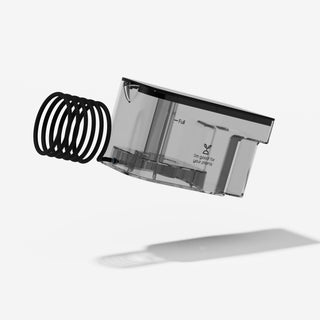
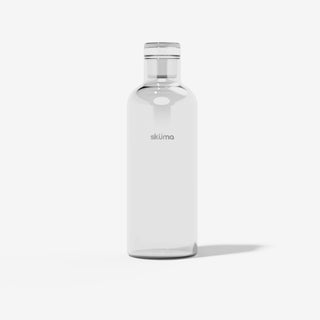
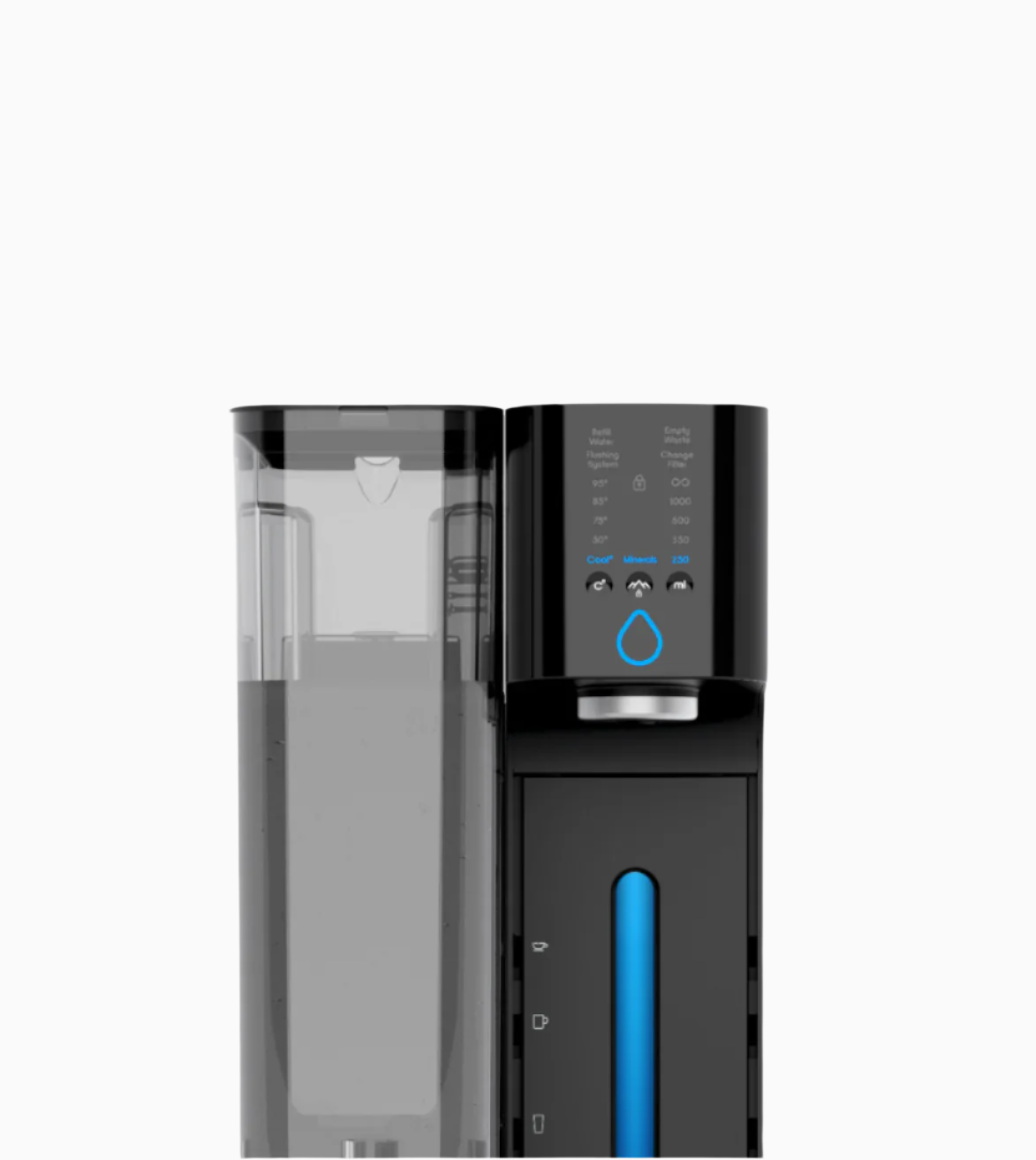
The MY™ Station runs tap water through one Super-Filter that holds three stages: a carbon block, a sediment filter and a reverse osmosis membrane. It needs no change to your plumbing, and Sküma puts set-up at about eight minutes.
In February 2025 an independent COFRAC-accredited French laboratory tested the Super-Filter against 229 contaminants found in tap water, chosen largely from French regional health agency reports and NSF certification recommendations: 165 pesticides and their metabolites, 20 PFAS, 14 heavy metals, drug residues, VOCs and vinyl chloride. Tap water was spiked with the contaminants before filtering and measured again afterwards. The Super-Filter removed 99.9% of them, and 98% of microplastics: particles fell from 316 to 6. Most results came out below what the laboratory could quantify, and total hardness fell from 315 to 14 ppm. As far as we know, Sküma is the only solution to remove 99.9% of contaminants across a list this wide, and the only brand to have had microplastics tested this way.

What goes back in is then your choice. AquaTru's mineral add-ons are an alkaline filter or drops; the MY™ Station uses three MY™ Bases profiles. Sküma's own measurements put the water at about 80 ppm with Soft, about 130 ppm with Plus and about 170 ppm with Alkaline. The mineral level in the glass is the one you picked rather than the one your postcode gave you. The aim goes beyond filtering: water optimised for hydration, very pure, balanced and pleasant to drink.

In short: purify first, then choose the minerals.
What to remember
TDS measures dissolved minerals, mostly calcium and magnesium. A meter estimates it from conductivity and cannot see lead, PFAS or bacteria. The WHO sets no health limit, and for taste, water below about 500 ppm works best day to day. Reverse osmosis drives the number down by design, a mineral-keeping filter leaves it near the tap, and remineralising after reverse osmosis sets it where you choose.

FAQ: TDS and water filters
What TDS level is best for everyday drinking?
For health, there is none to aim for: the WHO sets no health-based value. For taste, water below about 500 ppm is usually more pleasant day to day, which is the US EPA's guide for taste and appearance. London's City zone tap water reads roughly 385 ppm.
Can a TDS meter tell me if my water is safe?
No. It measures conductivity, which reflects minerals. Lead and PFAS are regulated at levels far too small to move the reading, and bacteria do not register.
Why is my TDS not zero after reverse osmosis?
No membrane removes everything. AquaTru says 10 to 50 ppm after its filter can be completely normal, and NSF/ANSI 58 asks for a reduction of at least 75%, not 100%.
Does the Ninja HydraSense lower TDS?
It is not designed to. SharkNinja describes it as a filter that preserves calcium, magnesium and potassium, so the reading stays close to the tap's.
What TDS does Sküma water have?
It depends on the MY™ Bases profile. Sküma measures about 80 ppm with Soft, 130 ppm with Plus and 170 ppm with Alkaline.
Is water with very low TDS bad for you?
The WHO says there is not enough information on long-term drinking of very low-mineral water to recommend for or against it. Its concerns are mainly taste and corrosion of pipes.
Sources: World Health Organization, Guidelines for Drinking-water Quality (2026); Directive (EU) 2020/2184; Water Supply (Water Quality) Regulations 2016; Thames Water, water quality report, City zone (2025); Rusydi, IOP Conference Series (2018); US EPA, Secondary Drinking Water Standards (2026); Li et al., Food Science & Nutrition (2025); US EPA WaterSense (2024); AquaTru performance data sheet and IAPMO R&T listings; SharkNinja; Sküma® laboratory test, February 2025; Sküma® MY™ Bases TDS measurements (2026).
Note: this article is for information purposes and does not replace medical advice.