


Bean and grind get most of the credit for a good cup of coffee, but water — roughly 98% of what's in your cup — decides whether that bean actually delivers. Two factors matter most: temperature and mineral composition.
What Temperature Is Best for Brewing Coffee?
Contrary to popular belief, boiling water doesn't automatically burn coffee. Hotter water simply extracts more from the bean — good for lighter roasts, riskier for darker ones.
- Light roast — around 95°C
- Medium roast — around 95°C
- Dark roast — around 85°C, to avoid bitter, ashy notes
For espresso specifically, temperature matters even more: 85-90°C for dark roasts, 88-92°C for medium, and 90-95°C for light roasts. The right number ultimately depends on your machine and your taste.
What Water Composition Is Best for Coffee?
The Specialty Coffee Association (SCA) sets the benchmark for brewing water:
- Clean, clear and good-tasting
- pH around 7
- TDS around 150 mg/L
- Total alkalinity (CaCO₃) around 40 mg/L
- Calcium & magnesium hardness: 17-85 mg/L each
- Sodium: around 10 mg/L
- Chlorine: 0 mg/L
Calcium and magnesium are essential for extraction and flavour — but above roughly 100 mg/L, water hardness rises enough to dull the brew.
Tap, Filtered or Purified: Which Gets You Closest?
- Tap water — UK tap water typically runs 100-300 ppm TDS (often higher in practice due to ageing infrastructure), with calcium around 100-365 mg/L, chlorine near 1 mg/L and sodium around 38 mg/L — well outside SCA's target range.
- Filtered water (e.g. a Brita jug) — removes chlorine and limescale, and slightly reduces TDS and sodium via ion exchange, but not enough to meaningfully change calcium, sodium or alkalinity levels.
- Purified water (reverse osmosis or distillation) — strips TDS, alkalinity, sodium, calcium and chlorine almost entirely. The catch: water this pure is corrosive to coffee machines and produces an acidic, flat-tasting brew unless minerals are added back in.
Conclusion
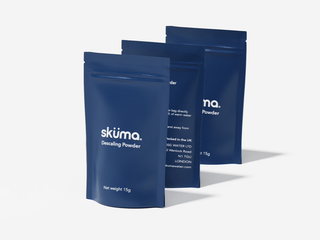
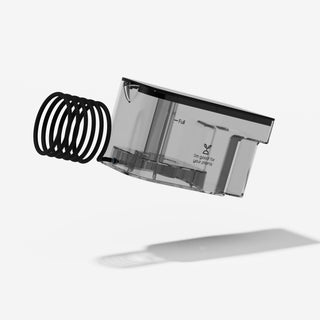
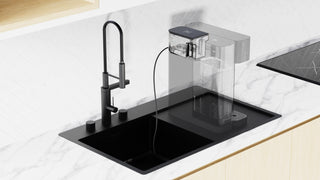
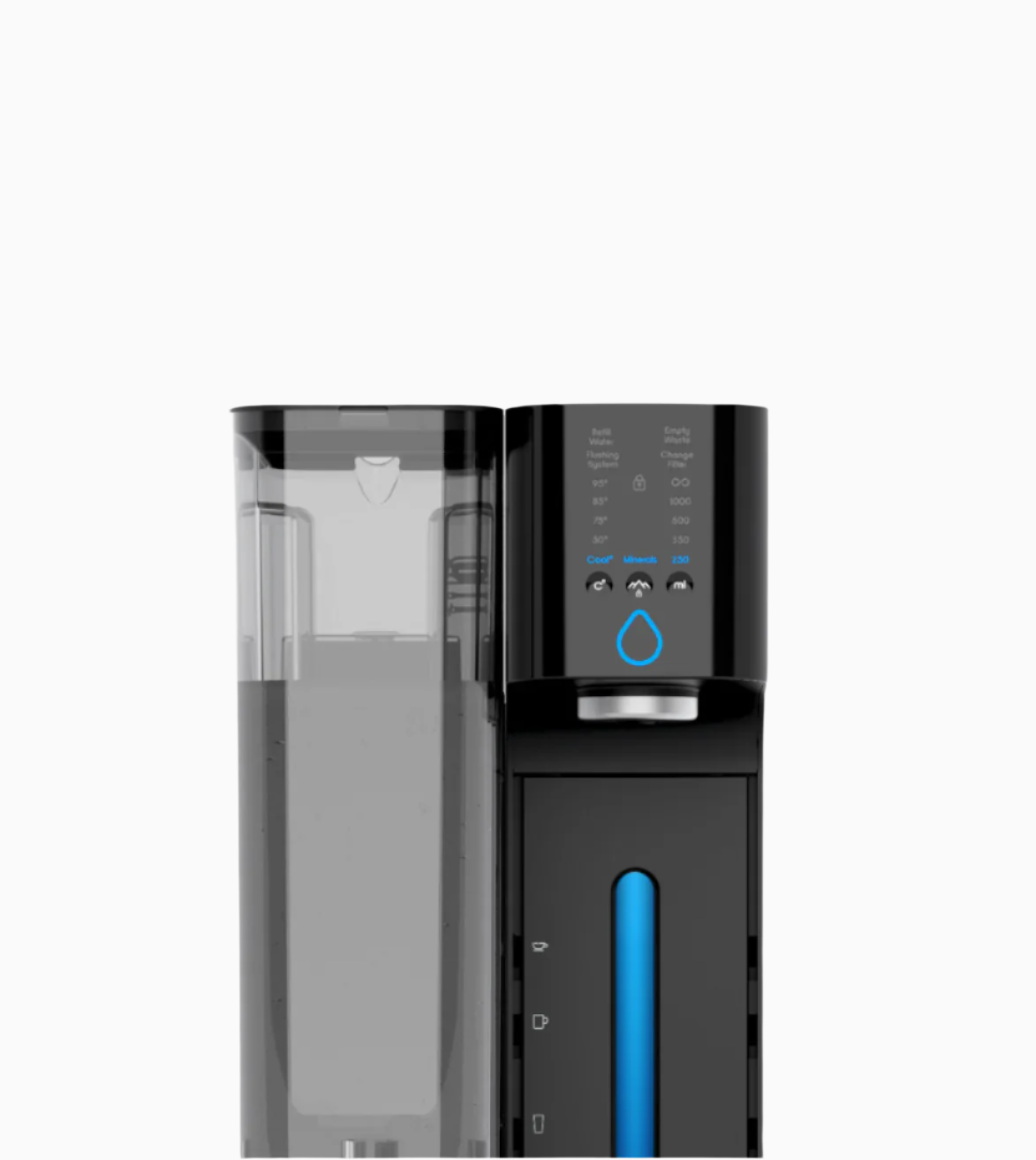
Hitting the SCA's target composition by hand means juggling mineral concentrates and purified water — messy, and easy to get wrong. The Sküma® Water MY™ Station purifies tap water via reverse osmosis, then adds back a specific mineral profile with your chosen MY™ Bases — getting you close to SCA-recommended water for coffee without the guesswork.
Frequently Asked Questions
Is tap water bad for brewing coffee?
UK tap water is usually too hard and too high in chlorine and sodium for the SCA's recommended range, which mutes flavour and can affect machine longevity through limescale build-up.
Does filtered water make better coffee than tap water?
Slightly — a standard filter jug removes chlorine and reduces limescale, but it doesn't bring calcium, sodium or alkalinity down to SCA-recommended levels.
Why does purified water sometimes taste worse in coffee?
Fully purified water lacks the minerals that carry flavour and buffer acidity. Without remineralisation, the resulting brew can taste flat or sour.