


Sleep is now widely recognised as one of the fundamental pillars of health, alongside nutrition, physical activity and stress management. Yet one key factor remains largely underestimated in its optimisation: hydration.
Hydration is often associated with physical performance or daytime concentration. In reality, it also plays a critical role during the night. The body’s fluid and mineral balance directly influences the biological mechanisms involved in falling asleep, maintaining deep sleep, and ensuring effective recovery.
Optimising sleep is therefore not only about duration, but about creating the right physiological conditions for restorative rest — and this, to a significant extent, depends on the water we consume.
A direct link between hydration and sleep quality
Even at rest, the body remains highly active. During sleep, it regulates temperature, repairs tissues, consolidates memory, and produces essential hormones such as melatonin. These processes require a stable internal environment, particularly in terms of hydration.
The body continuously loses water, including during the night through respiration and nocturnal perspiration. When these losses are not adequately anticipated during the day, even mild dehydration can disrupt key physiological balances.
This may result in more fragmented sleep, micro-awakenings, a feeling of discomfort, or reduced recovery efficiency. Research also suggests that fluid imbalance can influence hormonal regulation and contribute to fatigue upon waking.
Hydration should therefore be considered not only as a daytime habit, but as a factor that directly conditions the quality of sleep.
Nocturnal dehydration: a subtle but impactful phenomenon
Dehydration does not always manifest as thirst. It can be more diffuse, particularly overnight, where its effects are less noticeable yet still significant.
A mildly dehydrated body may struggle to maintain stable thermoregulation, which can interfere with sleep cycles. Muscle recovery may be less efficient, and nervous system regulation may be altered.
In the morning, this often translates into lingering fatigue, reduced alertness, or the impression of non-restorative sleep.
This phenomenon can be exacerbated by common evening habits such as consuming diuretic beverages like coffee, tea or alcohol, or by insufficient hydration throughout the day.
Minerals and sleep: a key balance for recovery
Hydration is not solely about the quantity of water consumed; its mineral composition is equally important.
Certain minerals play a direct role in physiological processes related to sleep. Magnesium contributes to muscle relaxation and nervous system regulation, supporting the onset of sleep. Potassium is involved in cellular balance and nerve transmission, while calcium plays a role in the release of melatonin, the hormone that regulates sleep cycles.
Sodium, when present in appropriate amounts, helps regulate fluid balance within the body.
These electrolytes facilitate the movement of water into cells, improving overall hydration efficiency. As a result, water that is poorly balanced or extremely low in minerals may limit these processes, even when intake appears sufficient.
Hydration and evening routines: finding the right balance
The way we hydrate towards the end of the day has a direct impact on sleep quality. The objective is not to drink large quantities just before bed, but rather to anticipate the body’s needs earlier.
Maintaining steady hydration throughout the day helps prevent imbalance in the evening. Later on, a moderate and considered intake is preferable to avoid sleep disruptions caused by night-time awakenings.
Warm beverages such as herbal infusions can support relaxation, provided they are caffeine-free. Plants such as chamomile, verbena or lemon balm are traditionally associated with calming effects.
Conversely, stimulating or diuretic drinks, including caffeinated beverages and alcohol, can negatively affect both hydration balance and sleep continuity.
Water quality: an often overlooked factor in sleep optimisation
Beyond quantity and timing, the quality of the water consumed also plays a role in sleep optimisation.
Tap water may contain traces of substances originating from the environment or distribution systems, including chlorine, pharmaceutical residues, pesticides, PFAS, and microplastics. Even at low concentrations, their presence raises questions within a preventive and optimisation-focused approach to health.
As the night represents a critical phase of regeneration, it becomes relevant to consider the quality of hydration before sleep.
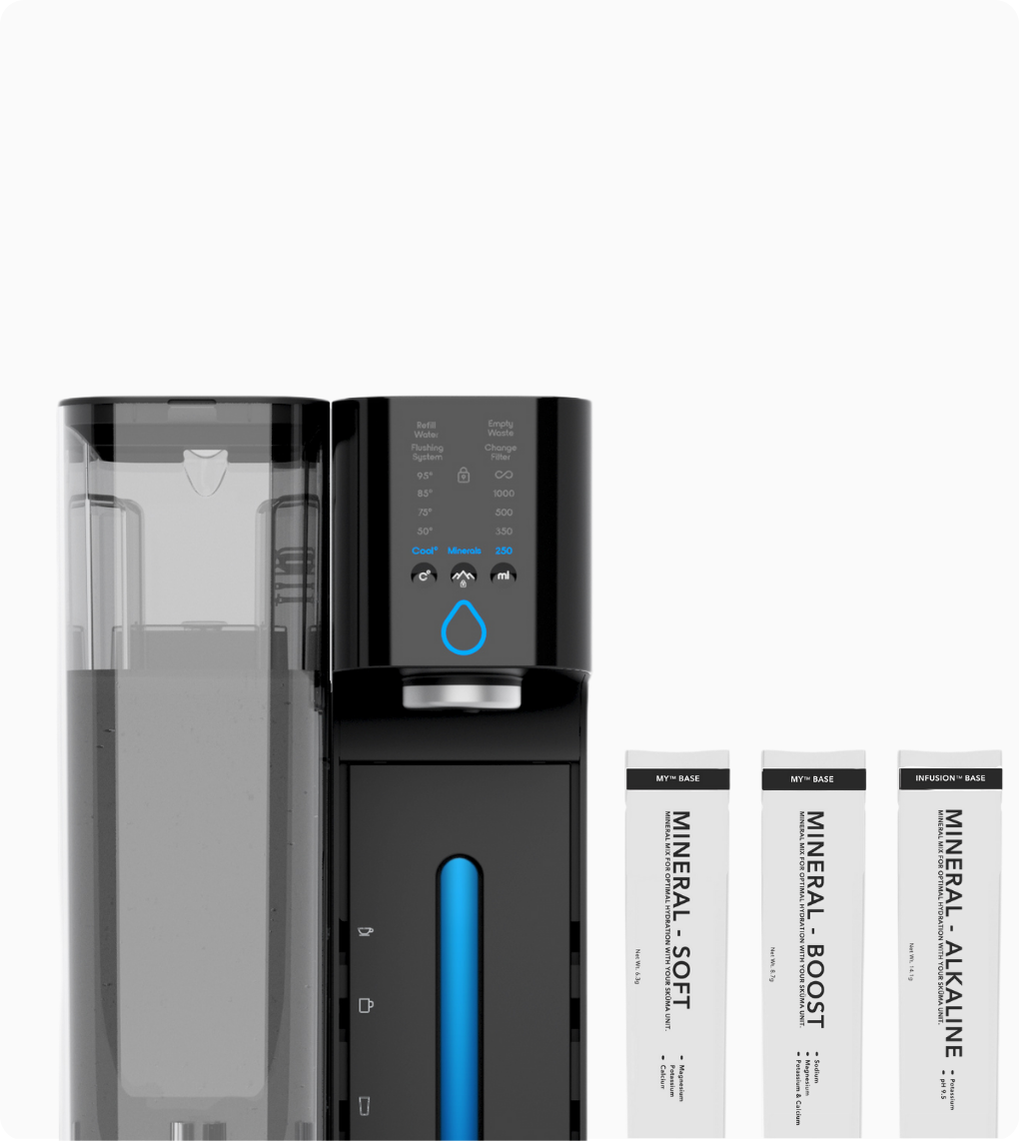
Purified water can help reduce exposure to these compounds, while a balanced mineral composition may support the physiological processes involved in overnight recovery.
Towards a more precise approach to sleep and recovery
Today, sleep is no longer viewed solely in terms of duration, but as a key lever for overall optimisation. This shift requires considering all factors that influence recovery, including those that may initially seem secondary.
Hydration is one of them.
It acts across multiple systems: cellular balance, thermoregulation, nervous and hormonal function, and muscular recovery.
Adopting a more precise approach to hydration — focusing on both water quality and mineral balance — can therefore contribute to measurable improvements in sleep quality.
Conclusion: better sleep starts with better hydration
Sleep relies on a complex balance in which every parameter matters. Hydration, often perceived as a simple daily habit, is in fact part of a broader strategy for optimising health.
Paying attention to the quality of the water consumed, its mineral composition, and how it is distributed throughout the day helps create more favourable conditions for falling asleep and recovering effectively.
In this context, better hydration is not about drinking more, but about understanding what we provide to the body. And perhaps, improving sleep begins with something as fundamental as water.