


Lemon, cucumber and mint steeped in a jug of water: detox water has become a fixture of wellness content online, routinely presented as a way to flush out toxins or support weight loss. What's left of these claims once they're weighed against the scientific literature?
How the body actually removes waste
The body already runs a complete, continuous elimination system that requires no external intervention to function:
|
Organ |
Role in waste elimination |
|
Liver |
Metabolises foreign substances and waste into water-soluble compounds for elimination |
|
Kidneys |
Continuously filter the blood and remove waste via urine |
|
Skin |
Eliminates a portion of metabolic waste through perspiration |
|
Intestines |
Eliminate solid waste and unabsorbed residues |
This system runs continuously, regardless of diet. A systematic review published in the Journal of Human Nutrition and Dietetics (Klein & Kiat, 2015) found no randomised controlled trials demonstrating that any so-called “detox” diet or drink improves or accelerates these physiological functions, which the liver and kidneys already carry out on their own.
That conclusion has since been reconfirmed more than once, including by a 2022 Frontiers in Nutrition analysis and, more recently, a 2026 review of commercially marketed detox teas, which found only limited support for their weight-loss claims and even flagged adverse effects (electrolyte disturbances, cardiovascular events) in some users.
The lemon water myth
Three claims recur regularly about lemon water, and none hold up against the available evidence.
The first suggests it boosts liver function: no clinical study demonstrates that lemon enhances the liver's capacity to metabolise waste, a function it already performs at full efficiency.
The second claims it “alkalises” the body: blood pH is tightly regulated by the lungs and kidneys and doesn't shift meaningfully in response to diet, regardless of how acidic or alkaline the food or drink itself is.
The third claims a direct fat-burning effect: there's no evidence that citric acid acts on fat cells. The weight loss sometimes seen during short detox cleanses comes down to calorie restriction and the loss of water bound to glycogen stores, a temporary effect that reverses as soon as normal eating resumes.
The habit's popularity shouldn't be mistaken for scientific validation of the mechanism behind it. Several registered dietitians who discuss the practice publicly are explicit on this point: where they recommend it, it's for reasons unrelated to detoxification, the taste encourages people to drink more, there's a modest amount of vitamin C involved, and any fluid drunk on an empty stomach can kick-start digestion in someone who's dehydrated, an effect that has nothing to do with lemon specifically. How widely a habit is recommended is not, by itself, evidence for the mechanism attributed to it.
What about cucumber and mint?
The picture is much the same. These additions flavour the water and can genuinely encourage people to drink more of it, a real benefit, since better hydration does support the liver and kidneys in doing their job. But there's nothing specific to these particular ingredients: any water, flavoured or not, produces the same effect once it's consumed in sufficient quantity.
What actually matters: the composition of the water itself
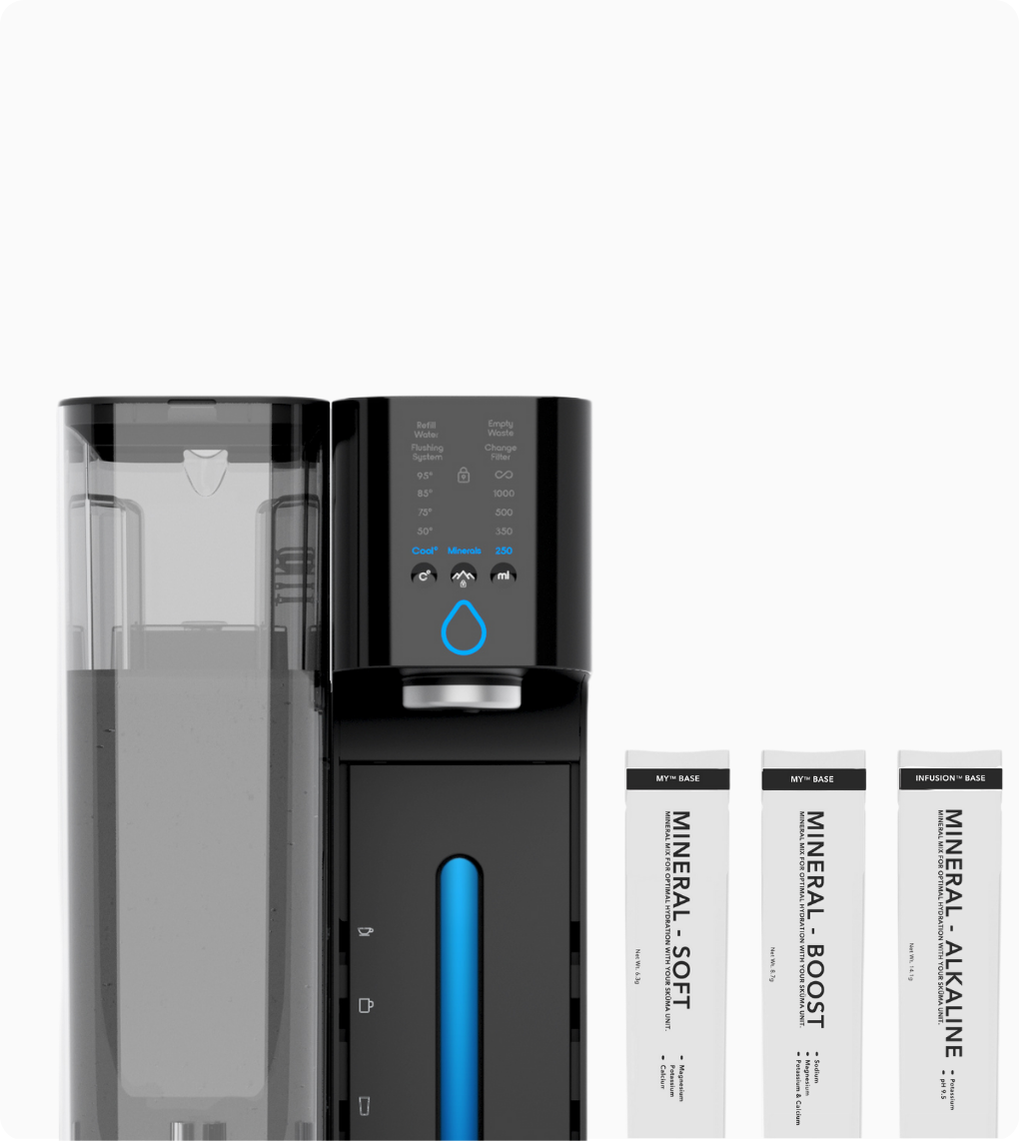
If adding ingredients to water doesn't change its ability to support the body's own elimination functions, what's already in the water before anything gets added deserves more attention. The MY™ Station removes more than 99% of the main contaminants found in tap water (pesticides, heavy metals, PFAS, pharmaceutical residues), a result certified by an independent COFRAC-accredited laboratory, reducing the load the liver and kidneys have to process in the first place.
Remineralisation completes the picture. The MY™ Bases profiles provide magnesium, potassium and calcium in measured amounts, electrolytes directly involved in fluid balance and cellular function, rather than aromatic additives with no demonstrated physiological effect. An approach grounded in what the water actually contains, rather than what's floated on top of it.
Frequently asked questions
Does lemon water detox the body?
No. The liver and kidneys already carry out this function continuously, and no study demonstrates any additional effect from lemon on this process.
Does drinking lemon water help you lose weight?
There's no evidence of a direct fat-burning effect. Weight loss seen during short cleanses comes from calorie restriction and temporary water loss, not fat loss.
Can lemon water make the body more alkaline?
No. Blood pH is tightly regulated by the lungs and kidneys and isn't meaningfully altered by diet.
Do infusions like cucumber or mint offer any benefit?
They can encourage more consistent water intake by making it more enjoyable to drink, a genuine benefit tied to hydration, not to any form of detoxification.
Sources
Klein A.V. & Kiat H., Detox diets for toxin elimination and weight management: A critical review of the evidence, Journal of Human Nutrition and Dietetics, 2015
Frontiers in Nutrition, review on the lack of clinical evidence for commercial detox diets for weight loss, 2022
Frontiers in Nutrition, Safety and effectiveness of diet and detox teas for weight loss: a mini-review, 2026
British Dietetic Association (BDA), Detox Diets Food Fact Sheet
National Health Service (NHS), position on detox diets
Ellis L.R. et al., A systematic review and meta-analysis of the effects of Hibiscus sabdariffa on blood pressure and cardiometabolic markers, University of Leeds, Nutrition Reviews, 2022
Independent COFRAC-accredited lab report, MY™ Station, Sküma Water
Note: this article is for information only and does not replace personalised medical or nutritional advice.