


This article was written in collaboration with Laurane Chemenda, functional nutritional therapist.
Microbiome, low-grade inflammation, dysbiosis, zonulin, SIBO: gut health has become one of the most talked-about topics in nutrition and wellness. Intestinal hyperpermeability, or leaky gut, is increasingly discussed in therapy rooms and across social media. Yet behind the flood of elimination protocols and ever-growing lists of foods to avoid, a far more fundamental question rarely gets asked: what is the actual physiological environment in which the gut operates?
Diet matters. No one disputes that. But reducing digestive health to a question of what you eat, or don't eat, means overlooking vast areas of physiology. One of the most significant blind spots: hydration. Not as a miracle cure, not as a standalone solution, but as one of the silent foundations on which gut function depends, every single day.
What if water, its quality, quantity, and consistency, were one of the most underestimated levers in modern digestive health?
Understanding Leaky Gut Without Oversimplifying It
The gut is not a passive barrier. It is made up of a single layer of epithelial cells held together by protein complexes known as tight junctions. These structures, composed primarily of claudins, occludins and ZO-1, precisely regulate the passage of molecules from the intestinal lumen into the bloodstream. Their regulation is dynamic, constant, and shaped by a wide range of internal and external signals (Turner et al., Nature Reviews Gastroenterology & Hepatology, 2023).
Normal intestinal permeability is essential for nutrient absorption and mucosal immunity. It is only when it becomes dysfunctional, through chronic disruption of tight junctions, that we speak of hyperpermeability, or leaky gut.
"Tight junctions are a bit like the mortar between bricks. In leaky gut, they either open prematurely or become damaged, creating lesions. They lose their role as gatekeepers, deciding what gets through and what doesn't, and start letting everything pass: toxins, pathogens, poorly broken-down molecules. This constantly activates the immune system and sets the stage for chronic low-grade inflammation." Laurane Chemenda, Functional Nutritional Therapist
The gut is not a broken organ that just needs fixing by cutting out gluten or dairy. It is a dynamic system in constant negotiation with its physiological environment. And it is that environment, not just the contents of your plate, that deserves closer attention.
Why Hydration Affects the Gut More Than You Think
Between the epithelial cells and the gut's contents sits a layer of mucus produced by goblet cells. This highly glycosylated gel plays a fundamental protective role: it prevents pathogens and antigens from reaching the epithelium directly, while providing a habitat for the commensal bacteria that make up the gut microbiome. Crucially, this mucus is mostly water. Its hydration directly determines its physical properties: its ability to act as a thick enough gel to filter effectively, while remaining fluid enough to renew itself (Cai et al., Journal of Chemical Physics, 2024).
"Someone who is chronically dehydrated will have a thinner, lower-quality mucus layer, meaning less protection at the gut wall. And water is also essential for digestive function itself: enzyme secretion, pancreatic enzymes, hydrochloric acid production. From both a functional and a protective standpoint, it really is critical." Laurane Chemenda
Beyond mucus, water is involved at every stage of the digestive process: saliva and gastric juice production, nutrient transport across the intestinal wall, regulation of transit speed. An estimated 8 to 9 litres of fluid move through the gastrointestinal tract every day. Insufficient hydration slows the whole system down, concentrates luminal contents, and undermines the absorption of the micronutrients the gut wall itself needs to function properly.
Hydration is not just about quenching thirst. It shapes the conditions under which the entire digestive system operates, from mucus production to nutrient transport to tight junction regulation.
Why Digestive Health Is About More Than What You Eat
The gut is constantly responding to signals that go well beyond what's on your plate. Chronic stress raises cortisol and activates intestinal mast cells, which release mediators that directly destabilise tight junctions. Sleep deprivation alters the same structural proteins (claudin, occludin, ZO-1) while depleting microbiome diversity. Excessive high-intensity exercise produces similar effects through oxidative stress.
"What often gets overlooked in gut permeability is the role of the nervous system: both chronic and acute stress. Stress has a direct impact on tight junctions, forcing them open prematurely. This can happen within 24 hours. That's why we always want to eat in a parasympathetic state: sitting down, away from screens, taking the time to actually chew." Laurane Chemenda
All of these factors converge on the same mechanism: a low-grade inflammatory state that weakens the gut barrier from within. Cutting out a food group does not address this physiological environment. That is precisely where quieter, daily, structural levers, like hydration, come into their own.
Rethinking Hydration as a Core Health Habit
Gut health is not built in a single meal or a single glass of water. It is built through repeated daily behaviours. Hydration is not a direct therapeutic tool against leaky gut, to claim otherwise would be the same kind of oversimplification as "cut out gluten and everything will be fine." But consistent, quality hydration does contribute to the physiological terrain in which the gut mucosa functions.
Water alone is not always enough. Sodium, potassium and magnesium each play specific functional roles in digestive physiology.
"You can think of minerals as the conductors of digestion. Zinc is essential for producing digestive enzymes and hydrochloric acid. Magnesium is involved in hundreds of enzymatic reactions and also supports nervous system relaxation, which directly helps transit. And minerals are actually what allow the body to absorb water properly in the first place." Laurane Chemenda
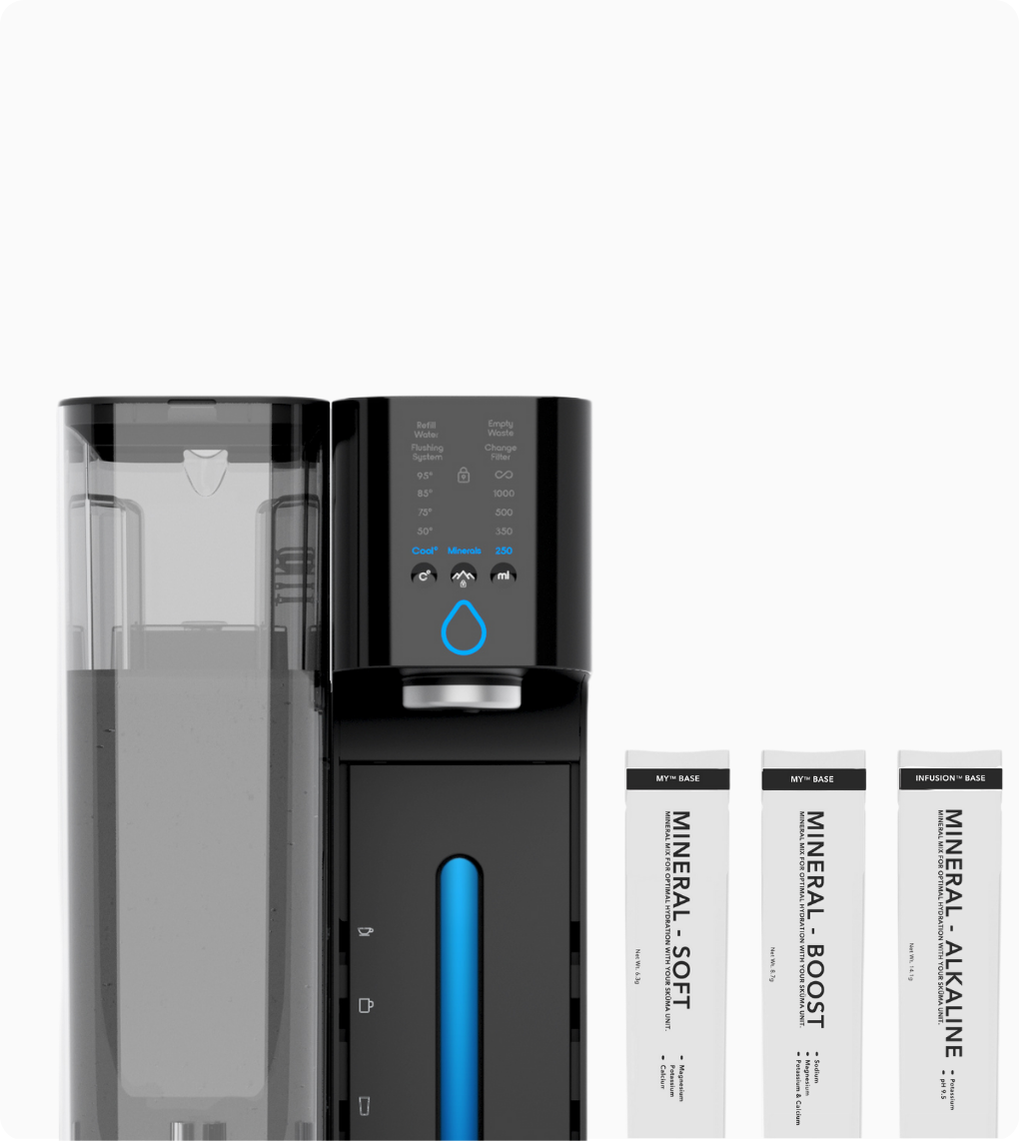
This points to a dimension that rarely makes it into wellness conversations: water quality. Pharmaceutical residues, pesticides, chlorine, microplastics: all compounds that can disrupt the microbiome and contribute to the toxic load that sustains gut inflammation. Filtering and remineralising, rather than reaching for bottled water, is an approach that is both more precise and more aligned with what digestive physiology actually needs.
Conclusion
Digestive health is not simply about what you add to or remove from your diet. It is also, perhaps more fundamentally, about the physiological environment you create, day after day, through your habits as a whole.
Hydration is one of the key elements of that terrain. Not because water fixes a leaky gut, but because a gut operating in a well-hydrated, properly mineralised, electrolyte-balanced environment has better conditions to function and defend itself. Modern digestive health may need less simplification, and a great deal more physiology.
Sources
-
Turner, J.R. et al. (2023). Paracellular permeability and tight junction regulation in gut health and disease. Nature Reviews Gastroenterology & Hepatology, 20, 417–432.
-
Dmytriv, T.R. et al. (2024). Intestinal barrier permeability: the influence of gut microbiota, nutrition, and exercise. Frontiers in Physiology.
-
Turner, J.R. et al. (2025). The intestinal barrier: a pivotal role in health, inflammation, and cancer. The Lancet Gastroenterology & Hepatology.
-
Cai, P.C. et al. (2024). Air–liquid intestinal cell culture allows in situ rheological characterization of intestinal mucus. Journal of Chemical Physics.
-
Sun, J. et al. (2023). Sleep Deprivation and Gut Microbiota Dysbiosis. International Journal of Molecular Sciences, 24(11).
-
Takami, M. et al. (2024). High-intensity exercise impairs intestinal barrier function by generating oxidative stress. Journal of Clinical Biochemistry and Nutrition, 74(2).
-
Moeser, A.J. et al. (2012). CRF Induces Intestinal Epithelial Barrier Injury via Mast Cell Proteases and TNF-α. PLOS ONE.
This article was written in collaboration with Laurane Chemenda, functional nutritional therapist. It does not constitute medical advice.