


The figure is alarming and was revealed by Le Monde, stemming from a vast ANSES campaign covering more than 600 samples, marking a turning point: this is not a local problem, but a national and structural contamination. A public health issue still largely underestimated.
What is TFA and why is it everywhere?
TFA (trifluoroacetate) is the smallest, most mobile and now the most detected of PFAS.
Unlike classic PFAS such as PFOA or PFOS, it has particularly concerning characteristics: it travels through the air, crosses soils, infiltrates groundwater, resists drinking water treatment processes and remains extremely stable in the environment.
Its main identified sources are:
- the degradation of certain fluorinated pesticides,
- various industrial processes involving fluorinated compounds,
- and especially HFO gases (hydrofluoro-olefins) used as refrigerants, which degrade in the atmosphere almost entirely into TFA according to international agencies.
Once formed, TFA is carried by precipitation, easily crosses soils and reaches groundwater. Its very high solubility and chemical stability explain its rapid dispersion in the environment.
It is this ultra-mobility that explains why it is now found in 92% of tap water samples analyzed in France by ANSES.
Contamination figures (ANSES 2023-2025)
Between 2023 and 2025, ANSES analyzed more than 600 drinking water samples:
- 92% contained TFA
- with an average concentration of approximately 1,000 ng/L
- and peaks reaching up to 25,000 ng/L.
To provide a benchmark, experts estimate that a concentration of around 100 ng/L of PFAS can already represent a health risk.
However, there is currently no official health value specific to TFA. In the meantime, agencies use the value applicable to undesirable and potentially toxic substances, such as pesticide metabolites.
This makes the situation all the more concerning: some French samples reach 25,000 ng/L, which is 250 times the level considered worrying for other PFAS.
Even without a dedicated threshold, this gap shows that TFA concentrations observed in France are exceptionally high for a component of this pollutant family.
Why are current treatments ineffective?
TFA is an ultra-short PFAS with unique properties that make it particularly difficult to eliminate:
- Minuscule size: its molecular structure is so small that it passes through most filters
- High solubility: it behaves like a mineral ion (chloride, nitrate)
- Extreme chemical stability: it resists ozonation, chlorination, UV, activated carbon adsorption and biological treatments
What health risks?
While the effects of classic PFAS are well documented (cancers, thyroid disorders, impact on immunity and reproduction), studies on TFA are fewer. However, they converge toward concerning risks, particularly in cases of chronic exposure.
Reproductive toxicity
The ECHA (European Chemicals Agency) is currently evaluating TFA for classification as Reprotoxic 1B, meaning a substance presumed toxic for human reproduction in the European Union. Animal studies show reduced fetal weight, hormonal disturbances and growth delays.
Hepatic and metabolic effects
A recent study published in Chemosphere (2023) demonstrates that TFA increases oxidative stress, disrupts hepatic enzymes and alters fatty acid metabolism.
Endocrine disruption
According to Environmental Science & Technology Letters (2022), ultra-short PFAS like TFA interfere with thyroid hormones (T3/T4), alter their transport and can influence hormone production.
The cumulative risk: the most concerning aspect
Even at low doses, daily exposure increases body burden, contributes to a cocktail effect with other PFAS and makes natural elimination difficult. EFSA (European Food Safety Authority) considers that reducing overall exposure to PFAS is a health priority in Europe.
Can TFA be filtered at home?
Faced with the inability of public networks to eliminate TFA, is there an effective domestic solution?
❌ Water treatment plants let it through
❌ Filter pitchers don't stop it
❌ Domestic gravity systems with activated carbon are ineffective
✅ Only reverse osmosis shows significant reduction of TFA as well as PFAS
These are the opinions of the US Environmental Protection Agency (EPA), Environmental Science & Technology Letters and numerous PFAS publications since 2020.
Sküma Water Super-Filter results
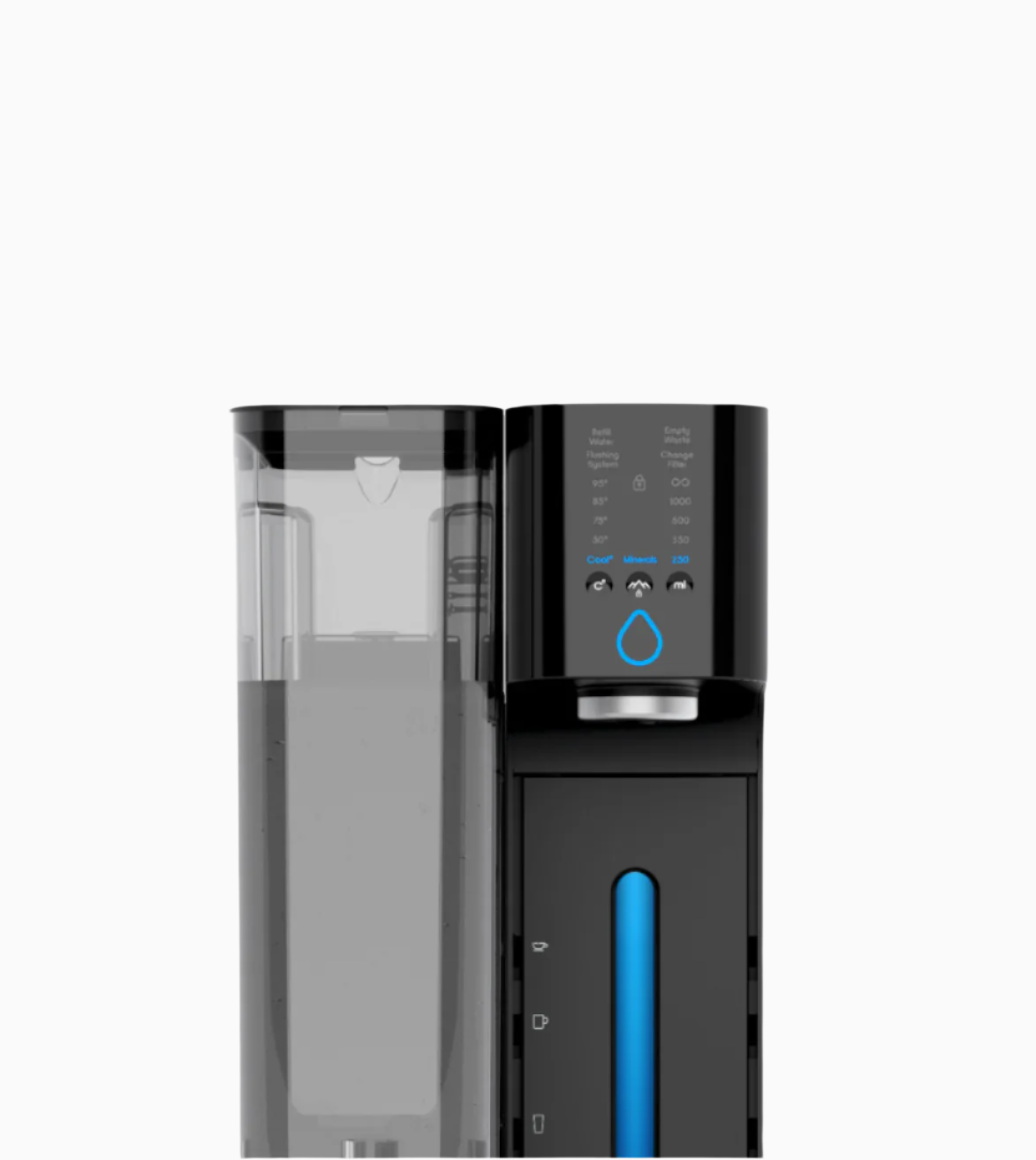
In February 2025, Sküma Water had its Super-Filter analyzed by an independent French COFRAC-accredited laboratory, using a comparative before/after filtration methodology on water deliberately enriched with pollutants, in order to precisely measure the removal rates obtained through its triple purification technology: sediment filtration, high-quality activated carbon and reverse osmosis.
The results demonstrate nearly 61% removal of TFA, a notable result for an ultra-short PFAS. Why is 61% significant? Because no domestic system can completely eliminate such a soluble pollutant. But a reduction of more than half decreases cumulative exposure, precisely the objective set by EFSA.
And for other pollutants and pesticides, the results are equally remarkable:
- 99.99% overall elimination of analyzed contaminants
- 165 pesticides removed
- 20 PFAS eliminated
- 98% microplastics filtered
And what makes all the difference: Sküma is the only brand able to commit to quantified results, because it is to date the only solution to have had its technology tested.
Conclusion: a new paradigm for drinking water
The revelation of widespread TFA contamination marks a turning point in our relationship with water:
→ Drinkable no longer means pure or healthy → Pure does not mean functional → The issue is no longer technical, but health-related
The best protection today relies on filtration at the molecular scale, demonstrated reduction of ultra-short pollutants, controlled remineralization and total transparency on performance.
This is precisely what Sküma Water offers.
Verified sources
- ANSES (drinking water analysis campaign 2023–2025)
- Le Monde, Mandard & Foucart, December 2025
- ECHA – PFAS Restriction Proposal, 2024
- EFSA PFAS Scientific Opinion, 2020
- Chemosphere, 2023 — DOI: 10.1016/j.chemosphere.2023.138415
- Environmental Science & Technology Letters, 2022
- EPA (US) – Short-chain PFAS behaviour in treatment systems
- COFRAC Report Sküma Water, 2025