


Every day, we turn on a tap without thinking twice.
It is probably one of the most automatic gestures in our daily lives. We fill a bottle, make a coffee, cook a meal or pour a glass of water without asking many questions.
Yet behind this simple act lies a more complex reality.
Where does this water come from? What does it actually contain? How much do we really know about its composition?
At a time when we read food labels, track our sleep data and monitor our health biomarkers, water remains one of the least scrutinised resources we consume. Not because it is mysterious. Simply because we rarely stop to think about it.
The Most Consumed Resource in Our Lives and the Least Examined
Over a lifetime, an adult consumes tens of thousands of litres of water. Yet unlike food or dietary supplements, most of us have little idea of its origin, its mineral content or the treatments it has undergone before reaching our glass.
Water occupies a peculiar position: it is taken for granted.
That trust is largely well-founded. In the UK and across most of Europe, tap water is subject to some of the most rigorous testing regimes in the world. But that confidence sometimes has an unintended side effect: it makes water almost invisible in conversations about health.
We talk about nutrition, the gut microbiome, sleep quality, physical performance, longevity. Far less often about one of the resources we consume most throughout our lives.
Trust and knowledge are not quite the same thing. And it is precisely that distinction worth exploring.
What Quality Reports Already Tell Us
The good news is that a significant amount of information is already publicly available.
Water suppliers and public health agencies regularly publish detailed analyses covering:
- the origin of the water (groundwater, surface water, catchment source)
- mineralisation and hardness
- microbiological quality
- nitrates and nitrites
- regulated pesticides
- certain heavy metals
- regulatory compliance parameters
These controls are designed to verify that tap water meets established potability standards and protects public health.
In the UK, water quality data is published by the Drinking Water Inspectorate (DWI) and by individual water companies. Tools such as mytapwater.co.uk aggregate this data into a simple postcode lookup, allowing anyone to check hardness, nitrate levels, PFAS status, lead, chlorine, fluoride and 25+ more parameters for their specific supply zone in seconds. The information exists. It is often just a few clicks away. You simply need to know where to look.
The New Questions Science Is Exploring
Understanding water quality goes beyond reading a compliance report. Regulatory standards are not fixed: they evolve alongside scientific progress. And science, for its part, keeps raising new questions.
PFAS: The “Forever Chemicals”
PFAS (per- and polyfluoroalkyl substances) are a group of synthetic molecules that have been used for decades across a wide range of industrial and consumer products: non-stick cookware, food packaging, water-repellent textiles, firefighting foams. Their defining characteristic: extreme chemical stability that makes them virtually indestructible in the environment.
In response to accumulating scientific evidence, the European Union significantly strengthened its requirements. Since January 2026, the revised Drinking Water Directive requires all Member States to carry out mandatory monitoring of PFAS across all drinking water networks, with binding limit values: 0.1 µg/L for the sum of 20 specific PFAS and 0.5 µg/L for total PFAS.
Microplastics
Found in surface water, groundwater and treated water alike, microplastics are attracting growing scientific attention. The World Health Organisation published an analysis noting that while available evidence did not establish a proven health risk at this stage, significant gaps remain, particularly regarding nanoparticles and the potential effects of long-term chronic exposure.
The absence of evidence of harm is not the same as evidence of absence of harm.
Pharmaceutical Residues and Emerging Contaminants
Antidepressants, hormones, antibiotics... certain pharmaceutical molecules find their way into water systems after passing through the human body or through improper disposal of medicines. These substances can sometimes survive conventional water treatment processes without being fully eliminated.
None of this means tap water is unsafe. It means that science is advancing, detection tools are improving, and regulations are adapting accordingly.
How to Find Out What Is Actually in Your Water
Getting information about the quality of your local water supply is more straightforward than most people realise.
Use a postcode checker. Tools like mytapwater.co.uk aggregate official data from all 21 UK water companies into a single, easy-to-read report. Enter your postcode and instantly see your hardness level, PFAS status, nitrates, lead, chlorine and more, sourced directly from your water company’s annual DWI compliance report.
Download your annual water quality report. Water companies in the UK are required to publish yearly reports covering the results of testing carried out on your distribution network. Most are available directly on supplier websites.
Know the key indicators. The main parameters worth looking at include:
- Hardness (TH): indicates calcium and magnesium content, relevant for mineral balance
- Nitrates: an important monitoring parameter, particularly in agricultural areas
- Pesticides: levels detected and specific substances found
- Turbidity: a measure of the physical clarity of the water
- Microbiological compliance: presence or absence of pathogenic bacteria
The goal is not to become a water chemistry expert. The goal is simply to better understand what you consume every day.
What Sküma Water Chose to Do Beyond That
Meeting mandatory potability parameters is the starting point. Not the finishing line.
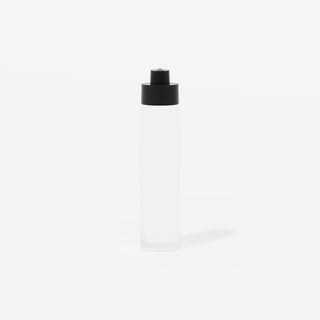
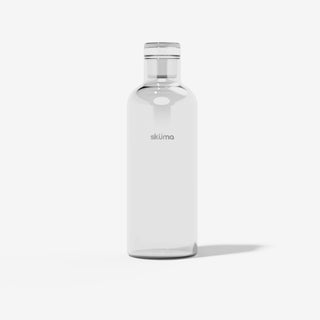
At Sküma Water, we made the decision to cover all D1 mandatory potability parameters required at the point of consumer tap. But we went further: we submitted our Super-Filter® to independent testing by a COFRAC-accredited laboratory, across more than 200 distinct molecules and parameters, including substances not yet systematically monitored under national or European regulation.
Because we know that what is only now being documented scientifically — PFAS, microplastics, pharmaceutical residues — was simply not being tested for a decade ago. And we chose not to wait for regulation to catch up with science.
Here is what the Sküma Water Super-Filter® eliminates, tested and certified:
|
Pollutant category |
Super-Filter® performance |
|
165 pesticides and phytosanitary compounds |
99.9% reduction |
|
20 PFAS (forever chemicals) |
99.9% reduction |
|
14 heavy metals (lead, arsenic, mercury…) |
99.9% reduction |
|
Microplastics (polyethylene) |
98.1% reduction |
|
Pharmaceutical residues |
99.9% reduction |
|
Nitrates |
−92% |
|
Vinyl Chloride Monomer (VCM) |
99.9% reduction |
|
Perchlorates |
99.9% reduction |
|
D1 mandatory potability parameters |
All treated |
|
The full independent test report on Super-Filter® performance is available on skuma.com |
Why This Conversation Matters More Than Ever
We are witnessing a broader shift in how people relate to their health. Consumers want more transparency. They want to understand where what they consume comes from, what it contains, and what impact it might have on their wellbeing.
Water is no exception to this shift.
We are gradually entering a new era where hydration is no longer simply about drinking enough litres per day. Quality, composition, mineralisation and control over what we drink are becoming subjects in their own right within health conversations.
That is precisely the vision behind Sküma Water: treating hydration as a matter of knowledge and informed choice, not just a daily habit.
Conclusion
At Sküma Water, we believe that modern hydration is not only about drinking more. It is about understanding what you are drinking and having the means to act on its quality.
The data exists. The reports exist. Knowledge advances every year. Regulation evolves alongside science. And science continues to ask new questions.
So the question is no longer simply: “Can I trust my water?”
It is: “Do I actually know the water I drink every day? And have I chosen the right tools to go further than what is simply permitted?”
Because transparency does not create fear. It creates knowledge. And when it comes to the resource we consume most over the course of our lives, understanding and choosing is probably the best place to start.
Sources
- European Commission, Directive (EU) 2020/2184 on the quality of water intended for human consumption (recast) — new PFAS monitoring requirements binding from January 2026.
- European Commission, Technical Notice C/2024/4910 — guidelines on analytical methods for PFAS monitoring in drinking water.
- European Environment Agency (EEA) — dashboard on PFAS contamination in European waters.
- World Health Organisation (WHO) — Microplastics in drinking-water.
- U.S. Environmental Protection Agency (EPA) — Draft Contaminant Candidate List 6 (CCL 6), April 2026.
- Sküma Water — Test Report No. E25-05401, Super-Filter® Performance, February 2025, COFRAC-accredited laboratory NF EN ISO/CEI 17025.
- mytapwater.co.uk — UK tap water quality checker by postcode (DWI data, 1,327 supply zones).
- Cai T. et al. (2025), Microplastics in Drinking Water: A Review, Toxics, DOI: 10.3390/toxics13090782.