
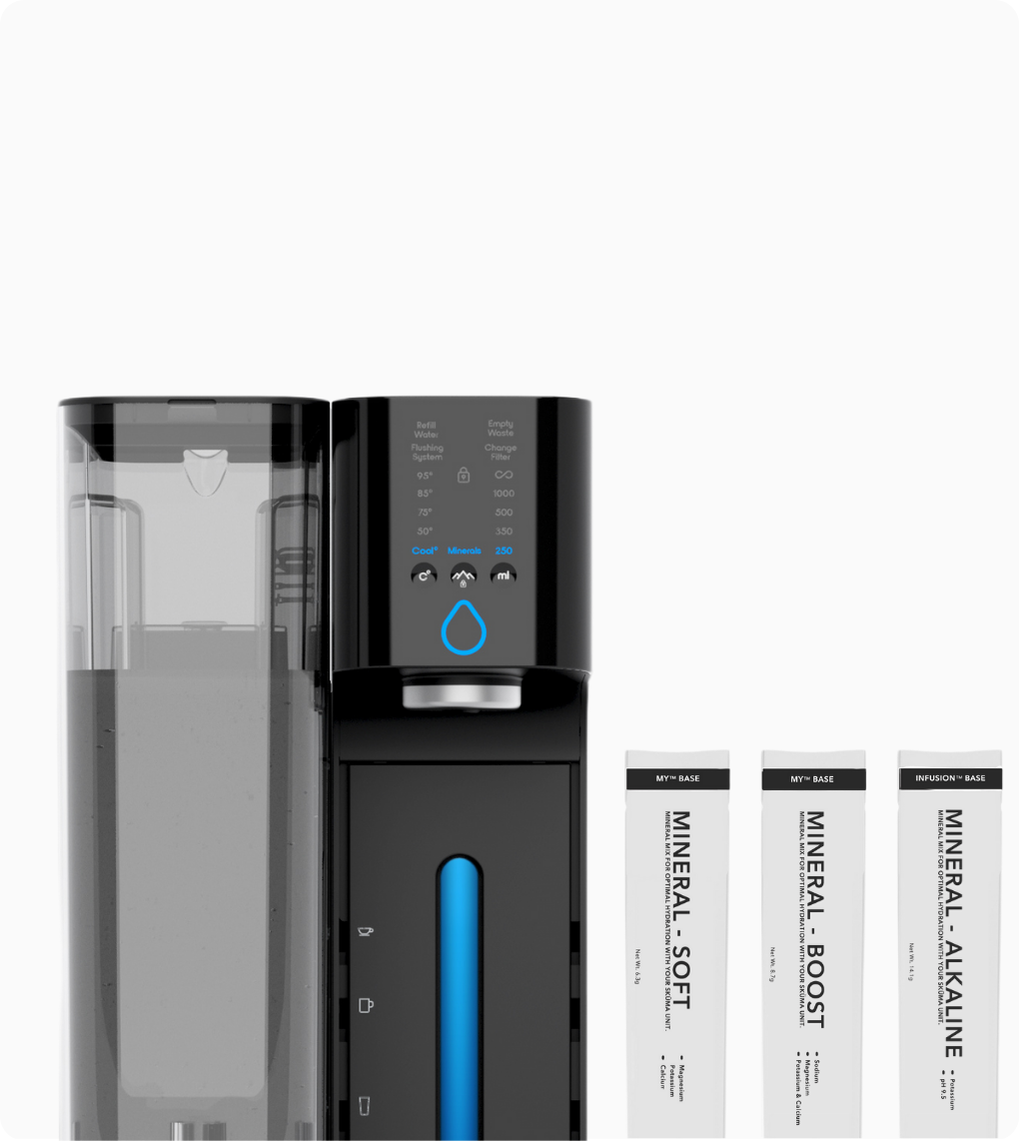


The short answer: the MY™ Station is made from high-quality materials, selected for their safety, durability and compatibility with drinking water. Every part was engineered for one job, from the reverse osmosis Sküma Super-Filter that rejects up to 99.9% of contaminants to the instant heater that heats water only as it pours. No hot water is stored, rejected contaminants are never recirculated, and only one filter needs changing, about once a year.
Here is each component in the order your water meets it: the tank, the Super-Filter, the waste water tank, the mineral system, the heater and the spout.
Why does every component in a water purifier matter?
A purifier is only as clean as the last thing the water touches. Filtering removes contaminants, but after that the water still passes through tanks, pumps, a heater and a spout before it reaches your glass. That is why the materials change after the filter, and why each part of the MY™ Station was chosen for the job it does at that point.
| Stage | Component | Main material |
|---|---|---|
| Holding tap water | Removable 4.8-litre tank | Premium food-grade, BPA-free ABS |
| Purifying | Super-Filter | Sediment filter, activated carbon, reverse osmosis membrane |
| Holding filtered water | Internal tank, about 1.5 litres | Premium food-grade, BPA-free ABS |
| Adding minerals | MY™ Bases bottles and dosing pump | Borosilicate glass, medical-grade peristaltic pump |
| Heating | Instant hot water module | 304 stainless steel |
| Pouring | Spout and connectors | 304 stainless steel, medical-grade silicone |
In short: each stage of the journey has its own component, and its own material.
What is the science behind the Sküma Super-Filter?
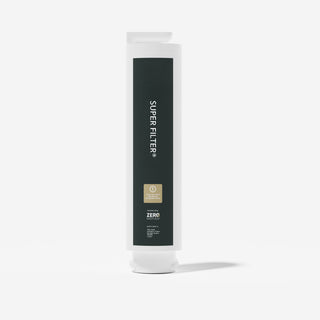
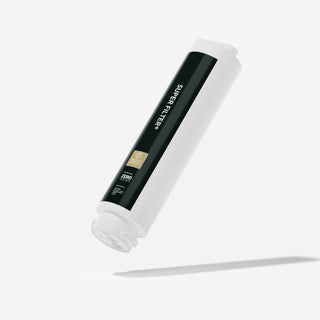
The Super-Filter puts three stages of filtration in a single cartridge. A sediment filter catches particles such as rust and sand, high-performance activated carbon takes out chlorine and the tastes and odours it brings, and a reverse osmosis membrane rejects up to 99.9% of contaminants, from PFAS and pesticides to heavy metals and microplastics.
Its results come from an independent French laboratory accredited by COFRAC, which added 229 contaminants to tap water and measured them before and after a new Super-Filter. Many results after filtering fell below the lowest level the lab's equipment could detect. One cartridge lasts 750 to 1,100 litres, depending on how hard your tap water is, which for most homes means changing it about once a year.
Verdict: three stages, one cartridge, one change a year for most homes.
What does the water sit in?
The MY™ Station has two tanks. You fill the removable 4.8-litre tank with tap water, so there is no plumbing to install. After filtering, about 1.5 litres of purified water waits in an internal tank, so a glass is ready straight away. When that reserve runs low, the next filtration cycle takes about 5 to 8 minutes.
Both tanks are made from premium, BPA-free, food-grade ABS, a material used in the water and health sectors for its strength and chemical stability in contact with water. Every internal fitting is food-grade certified, so nothing changes the taste or smell of your water or adds contaminants back.
In short: two food-grade tanks, one for tap water and one for filtered water ready to pour.
Where do the rejected contaminants go?
Reverse osmosis works by rejecting contaminants and flushing them away with part of the water, rather than trapping everything inside the filter. In the MY™ Station, that reject water collects in a separate waste water tank. It is never recirculated back into your drinking water, unlike some other countertop systems.
How much waste water there is depends on your tap water, especially its hardness: on average, a quarter to a third of the water used. You empty the waste water tank as you would a drip tray. If you would rather not, a standalone waste water tray with a drainage hose of up to 1.5 metres empties it straight into the sink.
In short: what the filter rejects goes to its own tank and is never recirculated, unlike some other reverse osmosis filters.
How are the minerals added?
Reverse osmosis removes minerals along with contaminants, so the MY™ Station adds them back with a medical-grade peristaltic dosing pump. A peristaltic pump moves liquid by gently squeezing a flexible, food-grade silicone tube, so the minerals only ever touch the inside of that tube. Its flow follows the speed of the pump, which is why this kind of pump is used for precise dosing, including in medical settings (Watson-Marlow). For you, that precision means a consistent mineral dose in every glass, whichever MY™ Base you choose.
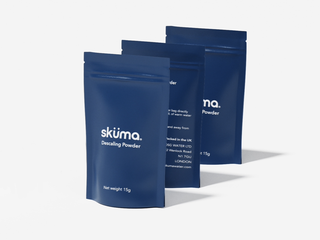
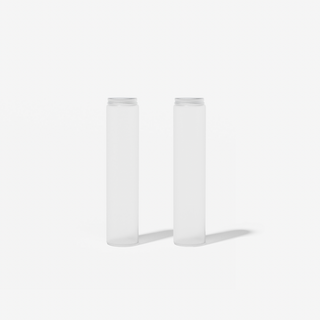
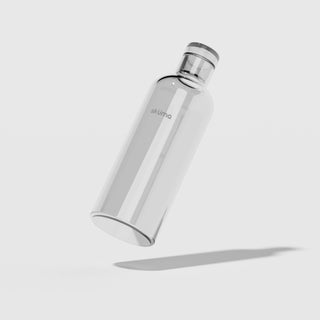
The minerals come from MY™ Bases bottles made of borosilicate glass, the glass used for laboratory equipment. It is highly resistant to water and chemicals and to sudden changes in temperature (DWK Life Sciences). The nozzles are food-grade ABS. Each MY™ Base makes up to 40 litres of water, and its minerals are heat-stable, so they work at every temperature.
In short: minerals stored in glass and delivered with precision, so every glass gets the same mineral dose.
How does the MY™ Station heat water?
Water is heated only as it is dispensed. No hot water is stored, so there is no tank kept warm all day and no water sitting at temperature. The instant hot water module, designed in Germany, is made from 304 stainless steel, and you can choose 50°C, 75°C, 85°C or 92°C.
The MY™ Station uses 1,600 W only while it heats, 30 W while it filters and 8 W on standby. Because it heats just the amount you pour, you are not boiling more water than you need.
In short: hot water on demand, heated only as it pours.
What does your water touch last?
The last parts your water passes through are the spout and the connectors in the hot water path. The spout is 304 stainless steel, and the connectors are medical-grade silicone.
We chose 304 stainless steel, also known as 18/8 for its 18% chromium and 8% nickel, because it is the most widely used stainless steel for food and drink equipment, from dairies to breweries, and is easy to keep clean and resistant to corrosion (Dixon).
In short: stainless steel and medical-grade silicone where the water is hot and about to reach your glass.
How do these choices fit together?
Each choice answers a specific problem: hot water is not stored, so no water sits warm in a tank, the conditions in which bacteria such as legionella can multiply (Health and Safety Executive); rejected contaminants have their own tank, so they cannot return; minerals stay in glass and touch only their pump's food-grade silicone tube; and the filter is a single cartridge, so maintenance is one change a year for most homes.
| Component | Built to | How |
|---|---|---|
| Super-Filter | Reject contaminants | Three stages in one cartridge, independently tested |
| Waste water tank | Keep rejected contaminants out | Separate tank, never recirculated |
| Peristaltic pump | Deliver a consistent mineral dose in every glass | Squeezes a tube; minerals touch only the tube |
| MY™ Bases bottles | Store minerals neutrally | Borosilicate glass |
| Instant heater | Avoid stored hot water | Heats only as it pours, 304 stainless steel |
| Spout and connectors | Finish the journey cleanly | 304 stainless steel, medical-grade silicone |
In short: a purifier designed as a whole, not a filter with parts added around it.
What to remember
The MY™ Station takes tap water through a single three-stage Super-Filter, sends rejected contaminants to a separate tank that is never recirculated, adds minerals back with precision, through a medical-grade peristaltic pump from borosilicate glass bottles, and heats water only as it pours, through a 304 stainless steel heater and spout. The tanks and body are food-grade, BPA-free ABS. Every result from the Super-Filter's laboratory test is on our Science page.
FAQ: inside the Sküma MY™ Station
Is hot water stored in the MY™ Station?
No. Water is heated only as it is dispensed, by an instant hot water module made from 304 stainless steel. Nothing is kept warm in a tank between uses.
Where do the rejected contaminants go?
Into a separate waste water tank. Waste water is never recirculated into your drinking water. You can empty the tank by hand or fit a standalone waste water tray that drains to the sink.
How much waste water does the MY™ Station produce?
On average, a quarter to a third of the water used, depending on your tap water, especially its hardness.
What is the MY™ Station made of?
The body and both water tanks are premium, BPA-free, food-grade ABS. The heater and spout are 304 stainless steel, the hot water connectors are medical-grade silicone, and the MY™ Bases bottles are borosilicate glass.
How often do I change the Super-Filter?
Each Super-Filter lasts 750 to 1,100 litres, depending on how hard your tap water is. For most homes, that means once a year.
What is a peristaltic pump?
A pump that moves liquid by squeezing a flexible tube, so the liquid only touches the inside of the tube. The MY™ Station uses a medical-grade peristaltic pump to deliver minerals with precision, so you get a consistent mineral dose in every glass.
Why borosilicate glass for the mineral bottles?
Borosilicate glass is highly resistant to water, chemicals and changes in temperature, which is why it is used for laboratory equipment.
What temperatures does the MY™ Station offer?
Room temperature, plus four hot settings: 50°C, 75°C, 85°C and 92°C.
Sources: Sküma product information and FAQ (2026); Sküma independent laboratory test, COFRAC-accredited laboratory (2025); Watson-Marlow, how peristaltic pumps work; DWK Life Sciences, glass types and properties; Dixon, food-grade stainless steel (2019); Health and Safety Executive, managing legionella in hot and cold water systems (2026). Last updated: 12/11/2026.
Note: this article is for information purposes and does not replace medical advice.