
Your cart

Your cart is empty

Check out our store:

A glass of iced water on a marble surface

Is cold water healthy? What the research actually shows

Cold water is as healthy as water at any other temperature, and for almost everyone the choice is a preference rather than a health decision. The claims made for it, that it burns calories and speeds up the metabolism, and the claims made against it, that it slows digestion or hardens fat in the stomach, both shrink badly once you read what was actually measured.

One temperature effect holds up better than the rest, and it is not the one the internet argues about. Iced water is not the best temperature for drinking a lot of water. When researchers offered people an 11 °C drink or a near-freezing slurry during exercise in the heat, they drank twice as much of the cool one.

Here is each claim against the numbers, and where the numbers run out.


What happens to cold water once you swallow it?

It stops being cold, and your body barely registers it. When 12 people swallowed 4 °C water at 7.5 ml per kilogram of fat-free mass, the temperature recorded inside their digestive tract fell by only 0.26 °C at its lowest, and that low point arrived 40 minutes after the drink rather than during it.

A second study put telemetry pills in 23 people and gave them 150 ml at 5 °C. The recorded temperature dropped 0.8 °C two hours later and 0.9 °C at three hours. The authors were not studying digestion at all. They were warning that a cold drink corrupts core-temperature readings for hours, which tells you how small and how slow the real thermal event is.

What nobody has done recently is put a probe in the stomach itself. The measurements everyone quotes, including the often-repeated figure of 21 °C reached 45 seconds after swallowing, come from studies published in the 1980s, and they have not been repeated. Even the newest laboratory models of cold milk digestion, published this year, rebuild their stomach temperature curve from that 1988 paper because there is nothing newer to use.

Verdict: the thermal event is small and brief, and the direct stomach measurements are forty years old.


Does cold water burn extra calories? What the evidence shows

The famous number is a 30% rise in metabolic rate, and it comes from a single paper published in 2003. Two things get lost in the retelling. The water in that study was at 22 °C, which is room temperature rather than cold, and no study since 2016 has re-tested the claim at all. A review published in 2025 by a group still working on water and weight reports that their own trial data fail to support water-induced thermogenesis as the mechanism. A 2016 review of the randomised trials found the literature split between negative, null and positive results depending on who was drinking.

The one recent experiment that put cold water beside room-temperature water found no difference between them. Ten men were cooled until they shivered steadily, then given water at 7, 22, 37 or 52 °C. Metabolic rate reached 269 W on the 7 °C water and 270 W on the 22 °C water, against 215 W at body temperature and 179 W on the hot drink. Cold and room temperature were indistinguishable. Two further details matter: mean body temperature did not differ between the conditions, so the response came from receptors in the abdomen rather than from any real cooling, and the whole experiment ran under whole-body cold stress. It is not a picture of someone drinking iced water at a desk.

The physics is not in dispute, and it is arithmetic rather than a research finding. Water takes about one kilocalorie per litre per degree, so the cost of warming a drink to body temperature is fixed and small.

Water From To Energy to warm it
A 250 ml glass 4 °C 37 °C about 8 kcal
Half a litre 4 °C 37 °C about 17 kcal
Half a litre 21 °C 37 °C about 8 kcal
Two litres across a day 4 °C 37 °C about 66 kcal

What survives about water and body weight has nothing to do with temperature, and it is more modest than the headlines. A 2024 meta-analysis of eight randomised trials in people with overweight or obesity found no significant effect of drinking more water on body weight at all, at −0.33 kg with a confidence interval from −1.75 to 1.08. The one place a signal appeared was in replacing sugar-sweetened drinks with water, at −0.81 kg.

There is one recent study that puts water temperature next to a body measurement, and it points the opposite way to the marketing. A cross-sectional survey of 172 adults found that people who reported drinking more than a litre of cold water a day had a body mass index 2.54 units higher than those drinking a litre or less at room temperature. It is cross-sectional, the temperature was whatever each person perceived it to be, and it cannot show cause. It is simply the only recent number there is, and it is not the one a cold-water claim would want.

Verdict: the 30% figure is a 2003 result nobody has re-tested, and cold water is not measurably different from room temperature.


Does cold water slow your digestion?

Only at the very start, and not by enough to change a meal. Twelve young men were given 400 ml of a carbohydrate and protein drink at 4 °C or 60 °C after cycling. The hot drink moved faster in the first half hour, but the time to peak emptying came out at 63.4 minutes against 59.3, and the difference was not significant. Neither was the halfway point of the measurement.

In 20 adults aged 65 and over, the same group found warmer drinks ahead only at the five and ten minute marks, with no significant difference overall. Across every trial published since 2016, drink temperature moves stomach handling inside the first five to thirty minutes and then the curves converge.

Further down there is nothing to find, because nobody has looked. Intestinal absorption has never been tested against drink temperature. A 2017 review of the question in an occupational health journal put it plainly: a direct influence of cold drinks on intestinal absorption is unlikely, because fluid entering the small intestine has already equilibrated to body temperature in the stomach. Its author went further and called the advice to give workers tepid drinks in the heat a misreading of the research.

There is one temperature effect on eating that does reach significance, and it runs the opposite way to the folk claim. Eleven men drank 500 ml of plain water at 2, 37 or 60 °C and were then fed as much as they wanted. After the cold water they ate 19% less than after body-temperature water and 26% less than after the hot.

Verdict: a difference in the first minutes, nothing over a full meal, and cold water was followed by less eating rather than more.


Does cold water help you exercise in the heat?

Before exercise, yes, and this is the best-evidenced benefit of a cold drink anywhere in this article. A 2023 review by the sports nutrition working group of the German Nutrition Society pooled 47 studies and 486 participants. Cooling from the inside improved time to exhaustion with a standardised effect of 0.40, and ice or cold water taken before exercise reached 0.52.

Timing decides everything. In the same analysis, effects on time-trial performance trended in the opposite direction. A 2018 meta-analysis of precooling studies found ice ingestion had no clear effect on performance at all, at 0.20 with a confidence interval crossing zero, while sitting in cold water did.

A 2017 trial shows what the useful version looks like. Seven cyclists rode to exhaustion at 35 °C after ice or 4 °C water. Ice followed by a 20-minute rest bought 46.0 minutes against 32.3 minutes on cold water, and the rest interval mattered as much as the ice: the same ice with a five-minute rest managed 38.7 minutes.

More is not better. A 2023 trial found a low dose of ice slurry beat its control while the normal dose did not, and the normal dose actually raised the rate at which gut temperature climbed. A 2025 study found every measured body temperature lower on slurry while high-intensity exercise duration came out statistically unchanged, with diarrhoea and stomach pain both significantly worse.

Verdict: real for a cold drink before endurance exercise in the heat, unproven during it, and an athlete's question rather than a household one.


Does a cold drink actually cool you down?

It removes real heat from your body, and your thermometer does not move. That sounds like a contradiction and it is the best-measured finding here. Two studies using direct calorimetry, the technique that actually counts the heat leaving a body, gave men ice slurry or a matched warm drink while they worked in 40 °C heat. Cumulative heat storage fell from 216 kJ to 69 kJ in the younger group and from 254 kJ to 90 kJ in the older one. Rectal temperature was unaffected in both. A follow-up found the same in women, with no difference between the sexes.

The reason is that you stop sweating as much. One review reports whole-body sweat losses of 471 grams an hour on near-freezing water against 679 grams an hour on a drink at body temperature, and the evaporation you give up is worth more than the heat you swallowed. That review was published in a supplement funded by the Gatorade Sports Science Institute, and its author received an honorarium from that body covering the writing, which is worth knowing even though two independent groups have since reached the same conclusion.

The clearest demonstration that what a cold drink changes is the feeling rather than the temperature comes from people who are unusually sensitive to heat. Twenty adults, half of them with multiple sclerosis, cycled in 30 °C heat while drinking water at either 1.5 °C or body temperature. Seven of the ten with MS could not complete an hour on the neutral water, and on cold water the same seven lasted 46.4 minutes against 32.7, about 30% longer. Their rectal temperature, skin temperature and heart rate were no different between the two. Nothing about them was cooler. They simply kept going.

The arithmetic explains the trade. Evaporating one gram of sweat carries away about 2,430 joules. Warming one gram of ice-cold water to body temperature absorbs about 155 joules, so a gram of evaporated sweat does the cooling work of roughly 16 grams of cold water. Drink half a litre of ice water and you have absorbed the equivalent of evaporating about 32 grams of sweat, which is two tablespoons, while the sweating you suppress runs to 208 grams in an hour.

Verdict: a cold drink makes you feel cooler and genuinely absorbs heat, and your body gives most of it back by sweating less.


Which temperature makes people drink the most?

A cool one, by about half again. A 2012 systematic review of 14 exercise trials is still the best pooled answer we have. All ten that measured preference found cold water at 0 to 10 °C, or cool water at 10 to 22 °C, preferred to anything at 22 °C or warmer, and pooling the five that measured how much people actually drank gave about 50% more of the cool drink, with an effect size of 1.4. Across the four trials that weighed their participants, dehydration during exercise came out 1.3% of body weight lower. The review is old, and that matters: its search closed in November 2010, nobody has re-run those trials since, and almost every modern authority naming a temperature is leaning on it.

One recent trial does test it directly, and it is small. Eight men drove two hours of simulated motor racing at 40 °C, once with water at about 5 °C and once at room temperature. They drank 872 ml of the cold water against 585 ml of the warm. All eight finished the session on cold water; only two of the eight lasted the full two hours on warm.

The other end of the scale is where the recent work is clearest, and it sets a floor. Eight people cycled for an hour at 35 °C with as much as they wanted of either an 11 °C drink or a near-freezing slurry. They drank 1,075 grams of the cool one and 527 grams of the slurry, and their time trials afterwards were no different. Cold enough to be pleasant got twice as much water into them as cold enough to be a novelty.

The bodies land in the same place without much behind them. The International Olympic Committee's 2023 consensus statement records that cool beverages at 10 to 15 °C are reported to increase the volume people drink, though that sentence sits in the statement's discussion and rests on an earlier review. A 2025 paper on hydrating workers in the heat names the same 10 to 15 °C range, citing the American occupational safety agencies. The National Athletic Trainers' Association, revising its position in 2017, dropped numbers entirely and says only that athletes often prefer cool drinks.

Verdict: cool rather than iced. Cool water gets about half again as much into you as warm, and near-freezing throws that gain away.


Who should be careful with cold water?

Four groups, and the list is specific. Achalasia is the clearest. In 44 patients keeping fifteen-day food diaries, cold items worsened swallowing for 27 of them, a little over half, and warm items helped. The condition is rare, at about 0.78 new cases per 100,000 people a year, and for those who have it the advice genuinely reverses.

Sensitive teeth are the most common reason by a distance. Dentine hypersensitivity has a best pooled estimate of 11.5% across the general population, though the simple average across the same 77 studies is 33.5% and individual studies range from 1.3% to 92.1%, so the honest answer is that it is common and badly measured. Among 930 patients at a periodontal clinic, cold was the most frequently named trigger, at 64.8%.

Then the headache, which has its own diagnostic code. Cold-stimulus headache is brought on by cold passing over the palate and resolves within ten minutes of the cold being removed. In a study of 618 adults, 51.3% got one, and in 92.7% of them it lasted under 30 seconds. The link people assume with migraine did not appear: the odds ratio was 1.17, with a confidence interval straddling one. What migraine did change was how much it hurt, not how often it happened. In children the migraine association does look stronger, though that rests on small studies.

Last, and newer than the rest, is the heart. A 2025 survey characterised 101 people who get atrial fibrillation after cold drinks, naming the pattern cold drink heart. Just over half said their episodes happened only after something cold, many linked them to recent exertion, and avoiding cold drinks reduced or stopped the episodes for 86.4%. These are people who already believe they have the trigger, so the figure describes them and not the population. A 2021 case report of a 35-year-old triathlete, where the arrhythmia was reproduced deliberately and room-temperature water did nothing, shows the effect is real in at least one person. Worth separating from cold plunges, because almost everything said about those travels by a route a glass of water cannot take. Immersion works through cold receptors across the whole skin, and its own recent evidence is awkward: a 2025 meta-analysis of eleven randomised studies found it raises inflammation for at least an hour afterwards, and daily immersion at 14 °C temporarily worsened glucose tolerance. Swallowing cold water slows the heart where immersion speeds it. No study has compared the two directly, and no claim about brown fat or metabolism from the plunge literature has ever been tested on a drink.

Verdict: a short and specific list, and if you are not on it the temperature is yours to choose.


Which cold water claims do not hold up?

The cancer claim has no research behind it, and that is the finding rather than a dodge. Harvard's Cancer FactFinder files it under "not evaluated", which it defines as no scientific research being available to assess the claim, often because researchers do not think it worth studying. Its own summary is blunter: no epidemiological studies have linked cold water to cancer risk, and drinking cold water does not harm digestion or increase cancer risk.

The temperature that does carry a cancer classification is the hot one, and the evidence behind it has grown since. In 2016 the International Agency for Research on Cancer classified drinking beverages above 65 °C as probably carcinogenic to humans on limited evidence for oesophageal squamous cell carcinoma, and in the same evaluation coffee itself was downgraded from possibly carcinogenic, where it had sat since 1991, to not classifiable. A 2025 analysis of 454,796 adults in the UK Biobank then found that people drinking four to six cups a day of beverages they described as hot had roughly twice the rate of oesophageal squamous cell carcinoma of those drinking warm ones, and for drinks described as very hot the same doubling appeared at four cups or fewer.

The solidified fat story fails on its own terms. What stops fat being digested is a fat whose own melting point sits above body temperature: a 2017 experiment showed lipolysis falling exponentially as the proportion of solid fat rose, with the melting point of the fat doing the work rather than anything the person drank. Laboratory digestion of cold milk points the same way, with milk at 4 °C coagulating more slowly than milk at body temperature rather than congealing. A fact check published in February 2026, quoting gastroenterologists and food scientists, puts the mechanism in one line: fat digestion happens because of bile and enzymes, not heat.

Colds and sore throats never had a study behind them. The experiment usually offered in evidence chilled people's feet, which is not a drink, and nobody has tested cold drinks against respiratory infection either before or since.

Verdict: the alarming claims have no mechanism and no research, and the only drinking temperature carrying a formal warning is the hot one.


What is still not known?

Blood sugar has been tested once, and the answer was no. A randomised trial gave 399 pregnant women their glucose tolerance test made up with water at various temperatures, including cold. The temperature made no significant difference to the result. The only significant glycaemic finding in the study involved soda water rather than temperature.

Appetite beyond that single 500 ml experiment has not been studied, and neither has intestinal absorption at any temperature. Period pain is the most requested answer and the least available one: the one recent survey to ask, covering 419 women, found cold drinks in winter associated with worse pain in one group while women who always drank cold water during their period reported less severe pain, and its authors say plainly that cause cannot be established from it. The intervention with real trial evidence behind it is a heat pack on the abdomen, which says nothing about what you drink.

No regulator treats any of this as a health question. Neither the NHS nor EFSA has published a position on the temperature of drinking water since 2016, which is itself informative. The bodies that would have to act on a real effect have not found one to act on.

Verdict: the gaps are wide, and none of them is filled by a confident claim.


Where does Sküma Water fit in?

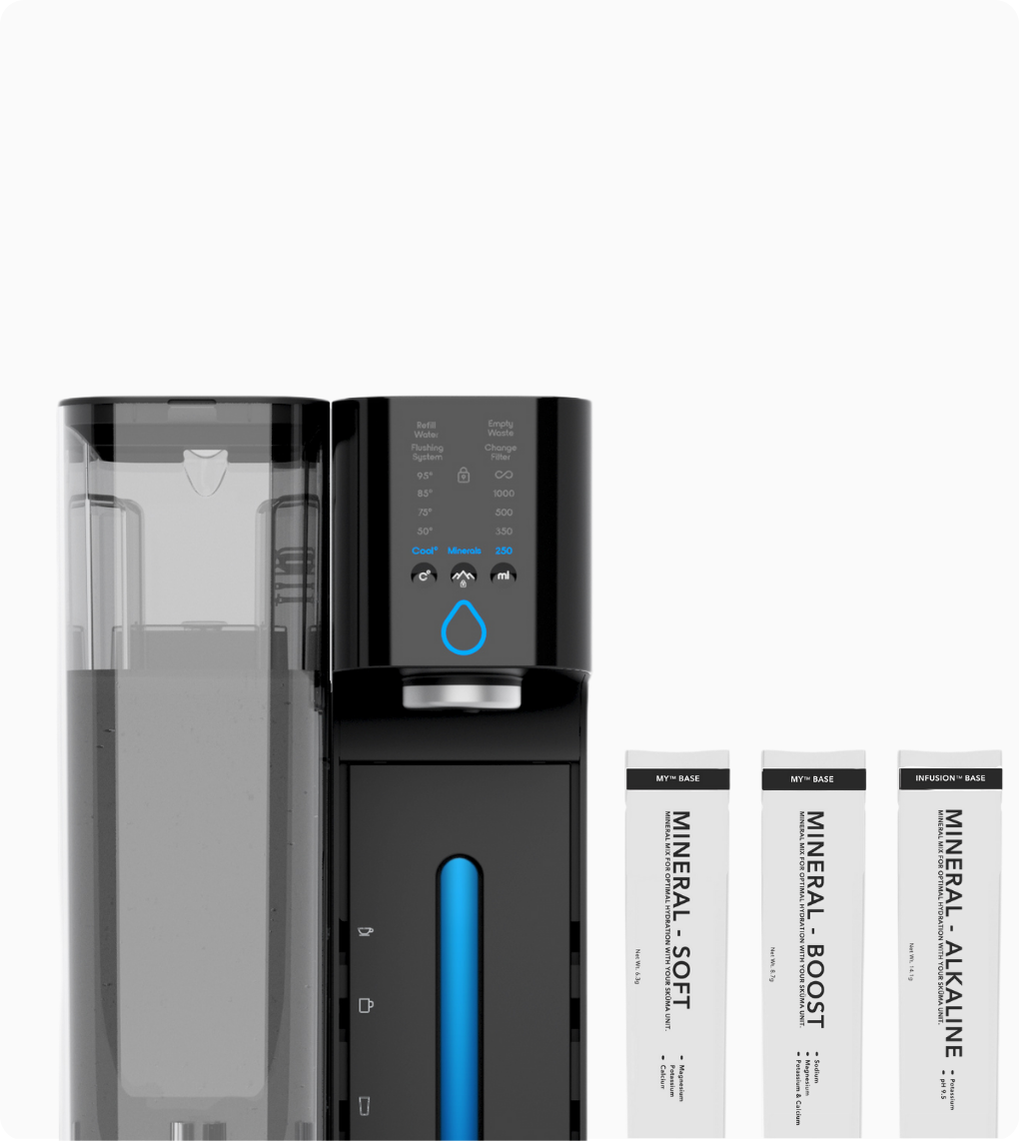
The MY™ Station serves purified water hot or at room temperature rather than chilled, and nothing above makes that a compromise. What it changes is what is in the water rather than how cold it is: reverse osmosis filtration takes the tap water down to the water itself, and MY™ Bases put back a mineral profile you choose. If you prefer it cold, a jug in the fridge settles it, and the evidence says that is a taste decision rather than a health one.


What to remember

Cold water hydrates exactly as well as warm water, and the thermal event inside you is smaller and slower than either side of the argument assumes. The 30% metabolism claim comes from a 2003 study at room temperature that nobody has re-tested since, and the one recent trial that compared 7 °C with 22 °C found no difference between them. Warming half a litre of iced water costs about 17 kilocalories on paper, and no modern study has caught the body paying it out as extra burning.

Where temperature earns its keep is narrower than the old story. A cold drink before endurance exercise in the heat measurably extends time to exhaustion. During exercise it absorbs real heat without lowering your core temperature, because you sweat less to compensate. And colder is not better: people drank twice as much of an 11 °C drink as of a near-freezing one.

If you have achalasia, sensitive teeth, the cold-stimulus headache, or you are one of the people whose heart rhythm reacts to a cold drink, warm water is the sensible choice. If you are not in that group, drink it at whatever temperature makes you drink more of it.


FAQ: Cold water and your body

Is cold water bad for you?

No. For people without achalasia, sensitive teeth or a rhythm that reacts to cold drinks, drinking cold water has no measured harm, and the temperature change inside you is small and brief.

Does drinking cold water burn calories?

Barely. Warming half a litre of iced water to body temperature costs about 17 kilocalories in principle, and the one recent experiment comparing cold with room-temperature water found the two indistinguishable.

Does cold water slow digestion?

Only in the first five to thirty minutes, and no trial since 2016 has found a significant difference in overall stomach emptying. Nothing about a meal's digestion changes.

Is cold or room-temperature water better for hydration?

Neither. The same volume of water hydrates you identically. The reason to choose a comfortable temperature is that people drink more of it.

What temperature should water be during exercise?

Cool rather than iced. The International Olympic Committee's consensus statement names 10 to 15 °C, and a 2023 trial found people drank twice as much of an 11 °C drink as of a near-freezing slurry.

Why does cold water give me a headache?

That is cold-stimulus headache, a recognised diagnosis caused by cold passing over the palate. About half of adults get it, it lasts under 30 seconds in most of them, and it resolves within ten minutes of the cold being removed.

Can cold water trigger a heart rhythm problem?

For a small number of people, yes. A 2025 survey of 101 people who report it found that avoiding cold drinks reduced or stopped their atrial fibrillation episodes in 86.4% of cases. This describes people who already have the trigger, not the general population.

Does cold water cause cancer?

No. Harvard's Cancer FactFinder records that no research exists to assess the claim and that no epidemiological study has linked cold water to cancer risk. The drinking temperature that carries a formal cancer classification is above 65 °C, not below.

Sources: Burdon, Johnson, Chapman & O'Connor, International Journal of Sport Nutrition and Exercise Metabolism (2012); Jolicoeur Desroches et al., Journal of Thermal Biology (2023); Roxane et al., Journal of Thermal Biology (2018); Feng et al., Food Research International (2026); Morris, Filingeri, Halaki & Jay, Journal of Physiology (2017); Stookey, Nutrients (2016); Davy et al., Physiology & Behavior (2025); Chen, Khil & Keum, Nutrients (2024); Khil et al., PLoS ONE (2024); Fujihira et al., Journal of Physiological Anthropology (2022); Fujihira et al., Temperature (2024); Fujihira et al., European Journal of Nutrition (2020); Brearley, Safety and Health at Work (2017); Guo, Bellissimo & Rousseau, Journal of Agricultural and Food Chemistry (2017); Heydenreich et al., Frontiers in Physiology (2023); Naito, Iribe & Ogaki, Journal of Physiological Anthropology (2017); Chaseling et al., Medicine & Science in Sports & Exercise (2018); Bird et al., Frontiers in Sports and Active Living (2025); Orysiak et al., Nutrients (2025); Choo et al., European Journal of Sport Science (2018); Ruddock et al., Sports Medicine (2017); Alhadad et al., Journal of Science and Medicine in Sport (2023); Katagiri et al., Medicine & Science in Sports & Exercise (2025); Richards et al., American Journal of Industrial Medicine (2024, 2025); Jay & Morris, Sports Medicine (2018); Ng & Wingo, Journal of Strength and Conditioning Research (2023); Racinais et al., British Journal of Sports Medicine (2023); McDermott et al., Journal of Athletic Training (2017); Cesarini et al., Frontiers in Nutrition (2026); Lee et al., United European Gastroenterology Journal (2024); International Classification of Headache Disorders, 3rd edition (2018); Kraya et al., Cephalalgia (2020); Bonemazzi et al., Life (2023); Favaro Zeola, Soares & Cunha-Cruz, Journal of Dentistry (2019); Martínez-Alcaide et al., Journal of Clinical and Experimental Dentistry (2025); DiLena et al., Journal of Cardiovascular Electrophysiology (2025); Scarfò, Fusi & Franzoni, American Journal of Case Reports (2021); Matur et al., European Journal of Applied Physiology (2026); Cancer FactFinder, Harvard T.H. Chan School of Public Health (2026); Loomis et al., Lancet Oncology (2016); Inoue-Choi et al., British Journal of Cancer (2025); Cain et al., PLOS One (2025); Solianik, Jarutiene & Brazaitis, Journal of Thermal Biology (2025); PolitiFact (2026); Wang et al., American Journal of Obstetrics & Gynecology MFM (2023); Wu et al., IJERPH (2023); Jo & Lee, Scientific Reports (2018).

Note: this article is for information purposes and does not replace medical advice. Any specific question about a condition affected by cold drinks should be directed to a healthcare professional.

Previous post